
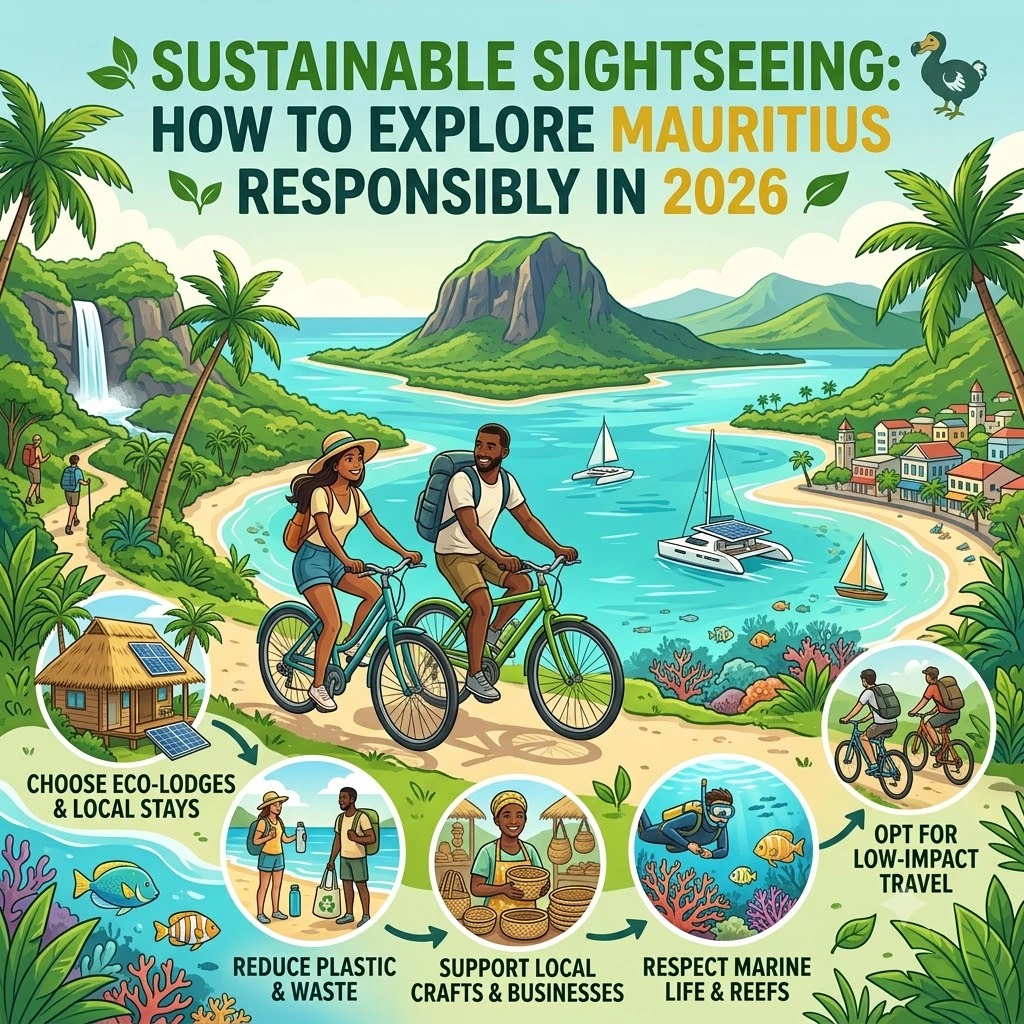
Mauritius goes green in 2026, and your holiday choices determine whether paradise survives or dies. Reef-safe sunscreen, locally owned stays, ethical wildlife tours, and plastic-free habits. These aren’t luxury extras anymore. They’re essentials.
Here’s how to explore responsibly without sacrificing adventure, luxury, or authentic Mauritian magic.
7-Steps to Explore Mauritius Responsibly
Here’s your 7-step responsible Mauritius exploration blueprint. Follow it for a safe, secure, and responsible tour to this beautiful island.
Step 1: Pack Smart Before You Land. Bring reef-safe mineral sunscreen (zinc oxide or titanium dioxide only), reusable water bottle eliminating plastic waste, cloth shopping bags, refusing single-use plastics, and biodegradable toiletries. Airport shops charge premium prices for eco-friendly alternatives better purchased before departure.
Step 2: Choose Accommodation With Proven Green Credentials. Skip greenwashing marketing. Demand concrete evidence: plastic-free policies, wastewater recycling systems, solar panels, composting programs, and active conservation partnerships. Locally owned guesthouses and eco-certified hotels deliver authenticity plus sustainability guarantees that international chains rarely match.
Step 3: Eat Where Mauritians Eat. Street food vendors and family restaurants serve dholl puri, gateau piment, and fresh seafood using local ingredients, minimal packaging, and traditional recipes, tastier, cheaper, and infinitely more sustainable than imported resort buffet waste.
Step 4: Book Only Certified Wildlife & Marine Activities. Research operators thoroughly. Legitimate conservation tours educate without exploiting, maintain respectful animal distances, refuse forced interactions, and fund actual protection programs. Red flag: guaranteed dolphin swimming promises (wild animals don’t guarantee appearances).
Step 5: Spread Your Footprint Beyond Hotspots. Le Morne and Chamarel suffer from overcrowding. Explore southern villages (Mahébourg fishing markets), eastern coastal walks, inland tea plantations, and lesser-known waterfalls, reducing pressure on fragile over-touristed zones.
Step 6: Travel Slow & Share Rides. Stay longer in fewer places, walk or cycle locally, and coordinate shared taxi transfers with other travelers, halving your carbon footprint while doubling authentic community connections.
Step 7: Leave Only Footprints, Take Only Photographs. Never touch coral, chase wildlife, collect shells, or litter beaches; Mauritius’ 330-kilometer coastline remains pristine only through collective visitor discipline protecting ecosystems for future generations.
These seven actions transform tourism from an environmental threat into a conservation force, without sacrificing a single moment of holiday enjoyment.
Your Mauritius holiday creates a lasting environmental impact, positive or negative, depending entirely on the choices made daily.
Practical Green Actions Visitors Can Take
5 Daily Habits That Make a Real Impact
Beyond accommodation, food, and activity choices, daily visitor behaviors compound into significant environmental impact across the entire holiday duration.
1. Carry Reusable Shopping Bags
Mauritius banned single-use plastic bags, yet enforcement varies. Bringing cloth bags from home eliminates plastic waste while signaling serious environmental commitment to local vendors and shopkeepers.
2. Refuse Plastic Straws & Single-Use Items
Politely decline plastic straws at restaurants and bars. This simple refusal signals consumer demand for sustainable alternatives, encouraging businesses to invest in bamboo, paper, or metal reusable options.
3. Choose Set Menus Over Buffets
Hotels increasingly replace wasteful buffets with portion-controlled set menus, choosing these options prevents massive food waste while enjoying higher quality meals with less excess.
4. Participate in Beach Cleanups
Join organised cleanups coordinated by hotels or environmental NGOs, directly removing pollution from sensitive coastal ecosystems while meeting like-minded travelers and conservation-focused locals.
5. Buy Only “Made in Mauritius” Certified Products
This official label identifies authentically Mauritian products versus imported imitations, ensuring your souvenir purchases support actual island artisans rather than overseas manufacturers.
Authentic vs. Imported Souvenirs: Know the Difference
| Authentic “Made in Mauritius” | Imported Mass-Produced | Impact Difference |
| Woven pandanus baskets by local artisans | Chinese-made “Mauritius” bags | Revenue stays local vs. overseas |
| Hand-carved wooden sculptures (ebony, teak) | Factory wooden trinkets | Traditional skills preserved vs. lost |
| Locally woven textile goods (kikois, sarongs) | Imported fabric with printed labels | Cultural significance vs. generic branding |
| Mauritian essential oils (ylang-ylang, vetiver) | Repackaged imported oils | Authentic botanical sources vs. synthetic |
| Local vanilla pods from plantations | Imported vanilla relabeled | Supports Mauritian farmers vs. middlemen |
| Island-distilled rum (Chamarel, New Grove, etc.) | International rum brands | Heritage preservation vs. corporate profit |
Why “Made in Mauritius” Matters
Authentic, locally crafted souvenirs deliver triple benefits:
1. Cultural Significance
Traditional basket weaving, wood carving, and textile dyeing techniques passed through generations, preserving endangered artisan skills threatened by mass manufacturing competition.
2. Economic Justice
Tourism revenue remains within the Mauritian economy, supporting artisan families, rather than flowing to overseas manufacturers exploiting “exotic island” branding without contributing to actual island communities.
3. Quality & Uniqueness
Handcrafted items feature individual character, superior materials, and genuine craftsmanship, unlike identical factory-produced souvenirs sold at every tropical destination globally.
Where to Find Genuine “Made in Mauritius” Products
- Port Louis Central Market: Artisan stalls selling handwoven baskets, carved sculptures
- Mahébourg Monday Market: Local crafts, textiles, vanilla directly from producers
- Chamarel village shops: Essential oils, rum, wooden crafts from surrounding artisans
- Flacq Market (Sunday/Wednesday): Largest local market, authentic craft sections
- Certified boutiques: Look for official “Made in Mauritius” certification displays
Pro tip: Ask artisans to demonstrate their craft. Genuine makers happily explain techniques, while resellers of imported goods deflect or refuse.
Choose Eco-Certified & Locally Owned Accommodations
What Mauritius Hotels Are Doing for Sustainability
Mauritius hospitality sector embraces a sustainable tourism revolution through measurable green initiatives, transforming how resorts operate daily:
Hotel Eco-Initiatives Island-Wide:
- Single-use plastic ban: No plastic bottles, straws, bags, or disposable toiletries, property-wide
- Wastewater recycling: Treated water used for irrigation and non-potable purposes
- Set menus replace buffets: Portion-controlled meals eliminate massive food waste
- Guest conservation projects: Mangrove restoration, sea turtle defense, and underwater region preservation programs
- Green building principles: Natural ventilation, solar panels, minimal carbon footprint design
Eco-lodges integrate seamlessly into surrounding landscapes without disrupting native habitats or wildlife corridors, proving that luxury and sustainability coexist successfully.
Why Choose Locally Owned Accommodations
Locally owned guesthouses and smaller hotels deliver authentic Mauritian hospitality while ensuring tourism revenue remains within island communities.
Every rupee spent at family-run accommodations:
- Strengthens the local economy directly
- Funds children’s education and healthcare
- Supports traditional artisan trades
- Preserves cultural traditions threatened by mass-market resort homogenisation
Even luxury travelers at international resort brands contribute sustainably through the following 4 ways:
- Booking local guides for island tours
- Eating at village restaurants beyond hotel properties
- Purchasing “Made in Mauritius” labeled products from Mauritian businesses
- Choosing community-based cultural experiences over imported entertainment
Eco-Hotel Success Story: Salt of Palmar
Salt of Palmar operates as Mauritius’ first 100% plastic-free eco-hotel, achieving TripAdvisor #1 ranking through genuine environmental commitment.
| Sustainability Feature | Implementation |
| Plastic-Free Policy | Zero disposable plastics property-wide |
| Toiletries | Bamboo products in reusable containers |
| Restaurant | Organic, locally sourced ingredients exclusively |
| Cultural Program | Skill Swap connecting guests with fishing communities, basket weavers, and traditional cooks |
| Guest Experience | Premium quality, proving sustainability elevates, not compromises |
This eco-conscious approach demonstrates that sustainability enhances rather than compromises guest experience quality, creating meaningful cultural exchanges benefiting both visitors and island residents simultaneously.
Respect Fragile Coastal & Marine Ecosystems
Mauritius’ 330-kilometer coastline, which protects pristine lagoons and vibrant coral reefs, requires vigilant visitor care. According to the UN Environment Programme, coral reefs support 25% of all marine species despite covering less than 1% of the ocean floor, yet physical damage from touching, standing on, or anchoring boats causes decades-long recovery periods, threatening entire underwater ecosystems.
Simple responsible behaviors preserve these irreplaceable natural wonders: apply only reef-safe mineral sunscreens (zinc oxide or titanium dioxide based, never oxybenzone or octinoxate chemicals killing coral polyps), never touch coral formations or chase marine life for photographs, bring reusable water bottles eliminating plastic waste polluting oceans and beaches, and stick exclusively to marked hiking trails preventing soil erosion and habitat destruction.
Conservation programs across the island demonstrate collective action effectiveness. Chamarel Seven Coloured Earth Geopark partners with local NGOs and government organisations supporting forest rehabilitation, plus endangered species reintroduction (critically endangered Echo Parakeet and Pink Pigeon populations recovering in natural habitats), while coastal hotels coordinate mangrove restoration projects stabilising shorelines, filtering water pollution, and providing nursery grounds for juvenile fish populations sustaining local fisheries. Visitors participate directly through volunteer conservation days, guided eco-walks explaining restoration techniques, and financial contributions to wildlife protection funds.
Bel Ombre Natural Reserve exemplifies sustainability in action. Strict green building guidelines maximise natural ventilation, reducing air conditioning energy consumption, breeding facilities support Mauritian Wildlife Foundation conservation work protecting threatened endemic species, and Annual Plant-A-Tree Day events invite neighboring school students to discover biodiversity protection value through hands-on reforestation participation. These initiatives succeed only through tourist support, choosing eco-certified activities over environmentally damaging alternatives.
Support Local Food Systems & Reduce Waste
Mauritian street food delivers triple sustainability benefits. Minimal packaging waste (food served in biodegradable paper or reusable plates), locally sourced ingredients reducing transportation carbon emissions, and direct income supporting family vendors rather than international restaurant chains.
- Dholl puri (yellow split pea flatbread with curry, chutney, pickles) costs $0.60-1.20 (28-55 MUR),
- Gateau piment (fried split pea fritters with chili) runs $0.09 each (4 MUR)
- Boulettes (steamed dumplings) provide filling meals under $3 (138 MUR)
These iconic Mauritian snacks taste exceptional while supporting sustainable food systems.
Family-run restaurants prioritise locally grown vegetables, day-caught seafood, and seasonal fruits over imported ingredients requiring extensive refrigeration and air freight transportation. Resort dining selections matter equally: opt for set menus over buffets (hotels increasingly replace buffets with portioned meals preventing massive food waste), request locally caught fish species over imported salmon or tuna, and sample Mauritian rum produced on-island using traditional sugarcane processing methods dating to 1800s.
Chamarel Geopark demonstrates comprehensive waste reduction, used cooking oil converts into biofuel and livestock feed, extending the oil lifecycle, benefiting the entire Chamarel community, all organic waste (fruit/vegetable peels, coffee grounds, paper, cardboard) transforms into compost fertilising geopark grounds, eliminating landfill dumping, and single-use plastics face absolute prohibition, forcing creative sustainable packaging solutions. Visitors eating at the geopark restaurant directly support these circular economy practices, proving waste elimination remains economically viable alongside premium dining experiences.
Explore Beyond Overtourism Hotspots
Famous destinations (Le Morne Brabant, Chamarel Seven Coloured Earth, Île aux Cerfs, Grand Baie) suffer visitor concentration pressures. Trail erosion accelerates from thousands of daily hikers, coral reefs surrounding popular snorkeling zones show stress damage from physical contact and sunscreen chemical pollution, parking areas overflow, causing roadside vegetation destruction, and local infrastructure (bathrooms, waste collection, emergency services) strains beyond designed capacity.
Sustainable sightseeing spreads visitor impact across broader geographical areas, reducing individual location pressures while revealing authentic Mauritian experiences unavailable at crowded tourist enclaves.
Southern and eastern villages offer genuine cultural immersion. Mahébourg fishing village features a Monday morning market where locals shop for fresh catch, vegetables, spices, and textiles, creating a vibrant sensory experience far removed from sanitised tourist shopping areas, while Souillac coastal town provides dramatic cliff viewpoints, Robert Edward Hart Museum (poet’s cottage), and traditional Creole architecture without tour bus invasions.
Exploring diverse Mauritius regions beyond standard itineraries supports underserved communities economically while protecting overtaxed hotspots environmentally.
The Government’s 2026 tourism strategy prioritises inland tourism development. Cultural and patrimonial sites, nature-based activities, wellness offerings, and MICE (Meetings, Incentives, Conferences, Exhibitions) segment expansion deliberately redirect visitor flows from coastal concentration toward interior regions. Black River Gorges National Park hiking trails, tea plantation tours, volcanic crater explorations, and mountain village homestays deliver adventure and authenticity without contributing to beach corridor overcrowding, threatening marine ecosystems, and coastal community quality of life.
Choose Ethical Wildlife & Nature Activities
Mauritius offers incredible wildlife encounters, but not all providers operate ethically. Certified responsible tour operators prioritise animal welfare over profit maximisation:
- Maintaining respectful distances from wild dolphins (never chasing or encircling pods, causing stress and pod separation)
- Refusing forced animal interactions (no captive lion cub photos, chained monkey performances, or elephant riding)
- Supporting sanctuaries focused on rehabilitation and release rather than permanent captivity for entertainment purposes
The following are the 4 Red flags identifying unethical operations:
- Promises of guaranteed dolphin swimming (wild animals can’t be guaranteed)
- Opportunities to touch or feed big cats (exploitation, not conservation)
- Unnaturally close wildlife photo opportunities (animals sedated or trained through punishment),
- Budget pricing significantly below certified operators (corners cut, compromising animal welfare)
Sustainable travelers research activity providers thoroughly. Look for partnerships with conservation organisations, transparent animal welfare policies, educational components explaining species biology and threats, and certifications from recognised wildlife protection agencies.
Chamarel Seven Coloured Earth Geopark demonstrates ethical nature tourism. Endangered Echo Parakeet and Pink Pigeon reintroduction programs educate visitors about conservation challenges while funding actual species recovery efforts, guided nature walks explain endemic flora ecological roles without allowing plant collection or habitat trampling, and the giant tortoise sanctuary provides spacious natural enclosures for rescued animals rather than cramped display cages. Entry fees ($14 / 650 MUR) directly fund these conservation initiatives, proving responsible tourism generates revenue supporting rather than undermining biodiversity protection.
South Mauritius tours and northern island explorations coordinated through ethical operators, like MoRide, ensure activities align with environmental protection principles, certified guides explain ecosystems’ fragility, enforce no-touch policies around wildlife and coral, carry reusable water bottles and reef-safe sunscreen, and educate about ongoing conservation efforts visitors can support beyond holiday duration.
Embrace Slow Travel Philosophy
What Is Slow Travel & Why It Matters
Slow travel represents the ultimate sustainable tourism approach, staying longer in fewer locations delivers environmental and cultural benefits impossible through rushed multi-destination itineraries.
5 Benefits of Slow Travel:
- Reduces carbon emissions: Fewer transfers, less transportation fuel consumption
- Deepens community connections: Time to build genuine relationships with locals
- Supports local businesses: Extended patronage creates reliable income streams
- Eliminates itinerary stress: Meaningful immersion replaces exhausting destination-hopping
- Enhances cultural understanding: Beyond superficial tourist encounters
Practical Slow Travel Strategy
Instead of: Cramming 7 regions into 7 days via rental car circumnavigation, burning petrol, and missing authentic experiences.
Choose: 2-3 base locations exploring thoroughly through walking, cycling, public transport, or shared taxis, minimising environmental impact while maximising local economic benefit.
| Travel Style | Carbon Impact | Cultural Depth | Local Economic Benefit |
| Rushed Multi-Region | High (daily driving) | Superficial (photo stops) | Low (chain hotels/restaurants) |
| Slow 2-3 Bases | Low (minimal transfers) | Deep (community integration) | High (local businesses, extended stays) |
Electric Bike Tours: Mauritius Beyond Resorts
Electric bike tours showcase authentic island life, impossible from air-conditioned tour buses:
Typical E-Bike Tour Experiences:
- Sugarcane field pedaling: Visit working plantations, meet field workers
- Roadside vegetable stands: Purchase produce directly from farmers
- Village temple & mosque exploration: Learn about Mauritius’ religious diversity (48% Hindu, 32% Christian, 17% Muslim)
- Family home lunches: Experience genuine Mauritian hospitality and home cooking
Triple Sustainability Impact:
- Environmental: Zero fossil fuel consumption during tours
- Economic: Employment for local guides, income for rural communities
- Cultural: Cross-cultural exchanges enrich both visitors and residents
How Slow Travel Transforms Your Holiday
Morning: Neighborhood Bakery Coffee
Chat with regular customers in French or Creole over fresh croissants ($0.60 each) and café au lait, learning local news, getting restaurant recommendations, practicing language skills beyond resort English-only bubbles.
Afternoon: Lesser-Known Public Beaches
Share beach space with Mauritian families at Bain Boeuf, Le Bouchon, or Pointe aux Piments, children playing cricket, locals fishing from rocks, authentic island life versus exclusive resort isolation.
Evening: Local Market Browsing
Discuss cooking techniques with vendors selling fresh fish, tropical fruits, and spices. Learn how to prepare mine frit (fried noodles), vindaye (pickled fish), or rougaille (tomato-based stew) using traditional methods.
Weekend: Village Festival Participation
Celebrate Hindu Diwali (October), Muslim Eid (varying dates), Chinese Spring Festival (January/February), or Cavadee (January/February) alongside local communities. Authentic cultural immersion is impossible through sanitised resort entertainment.
Authentic Interactions Create Lasting Memories
These genuine experiences create memories lasting decades beyond generic resort stays, regardless of luxury level or budget spent. Slow travel isn’t about sacrifice. It’s about experiencing Mauritius as Mauritians do rather than observing from tourist bubble windows.
The slow travel difference: Cultural understanding versus cultural consumption.
Frequently Asked Questions
What makes accommodation eco-friendly in Mauritius?
Eco-friendly Mauritius accommodations eliminate single-use plastics, recycle wastewater for irrigation, use renewable energy (solar panels), compost organic waste, source food locally, employ green building techniques maximising natural ventilation, and support conservation projects like mangrove restoration or endangered species protection programs. Look for certifications, transparent sustainability policies, and measurable environmental initiatives beyond greenwashing marketing claims.
Is reef-safe sunscreen really necessary?
Absolutely! Traditional sunscreen chemicals (oxybenzone, octinoxate) kill coral polyps even at extremely low concentrations, causing bleaching and preventing reproduction. Mauritius coral reefs already face climate change stress; adding chemical pollution accelerates degradation. Use only mineral-based sunscreens (zinc oxide, titanium dioxide) or cover up with UV-protective clothing, rash guards, and hats protecting skin without poisoning marine ecosystems.
How can I support local communities beyond tipping?
Buy “Made in Mauritius” certified products supporting Mauritian artisans and manufacturers, eat at family-run restaurants rather than international chains, book locally owned guesthouses over foreign resort brands, hire Mauritian guides for island tours and activities, shop at local markets purchasing directly from farmers and craftspeople, and choose community-based cultural experiences ensuring revenue remains within villages rather than corporate headquarters.
Are dolphin swimming tours ethical in Mauritius?
Most aren’t. Wild dolphin populations suffer stress from daily boat chasing, engine noise disrupting echolocation communication, and tourist swimmers separating mothers from calves. Ethical operators maintain respectful observation distances, limit group sizes, avoid peak breeding seasons, and prioritise dolphin welfare over guaranteed close encounters. If the operator promises swimming guarantees or approaches pods aggressively, choose a different provider supporting conservation, not exploitation.
What’s the most sustainable way to get around Mauritius?
Walking and cycling produce zero emissions, exploring local areas, public buses cost pennies yet require patience and time flexibility, while shared taxi services coordinating multiple visitor transfers reduce per-person carbon footprint compared to individual rental cars. For longer stays, electric vehicle rentals (increasingly available in 2026) combine exploration freedom with reduced emissions; whichever transport is chosen, slower travel with fewer longer stays beats rushed multi-destination itineraries burning unnecessary fuel.
Start Your Sustainable Mauritius Journey Today!
Sustainable sightseeing preserves Mauritius’ extraordinary natural beauty, vibrant coral reefs, endemic wildlife populations, and authentic cultural traditions for future generations, while enhancing rather than diminishing your holiday experience through meaningful local connections, ethical wildlife encounters, and genuine cultural immersion impossible within unsustainable tourist bubble operations. Every conscious choice matters: reef-safe sunscreen protects fragile marine ecosystems, locally owned accommodation bookings strengthen Mauritian families economically, certified conservation activity selections fund species recovery programs, and slow travel philosophy reduces environmental impact while deepening destination understanding.
Minister of Tourism Richard Duval’s 2026 “greening the destination” commitment demonstrates government recognition that sustainable tourism represents Mauritius’ future, but transformation succeeds only through collective visitor participation, making responsible choices aligning holiday enjoyment with environmental protection and community benefit.
MoRide’s eco-conscious island transportation services coordinate sustainable sightseeing logistics connecting travelers to ethical tour operators, conservation sites, locally owned restaurants, and authentic cultural experiences, minimising carbon footprint while maximising positive impact across communities deserving respectful, responsible tourism supporting livelihoods without destroying landscapes, attracting visitors initially. Your sustainable Mauritius adventure awaits discovery!

