
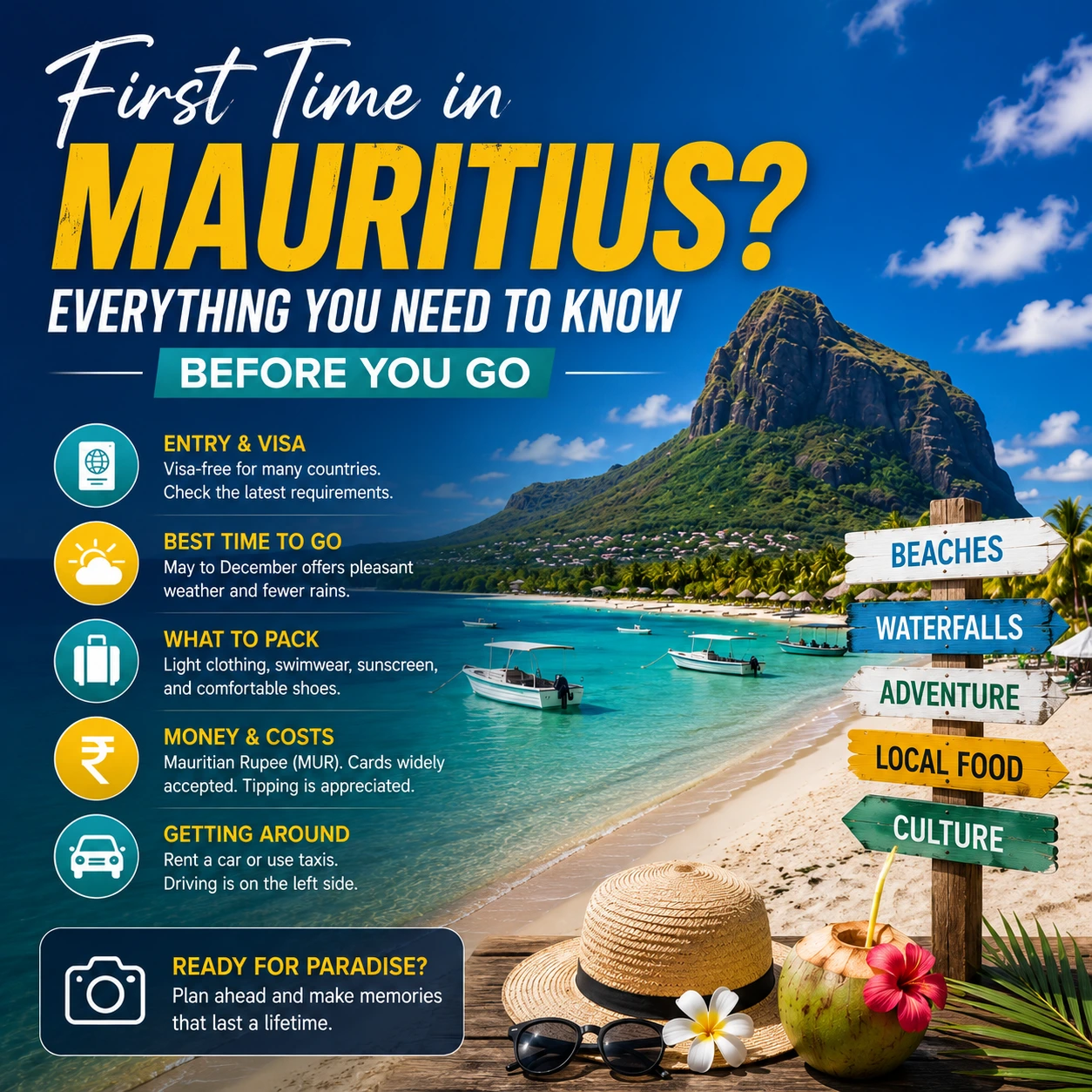
If it’s your first time in Mauritius, plan a 7- to 10-day trip, stay in the region that matches your travel style, book your airport transfer before arrival, and leave enough time to enjoy the island instead of rushing from one attraction to another.
Mauritius is one of those destinations that looks exactly like the photos. White beaches, turquoise lagoons, lush mountains and luxury resorts are all here. But once you arrive, you’ll quickly realise the island offers much more than relaxing by the sea.
One day you could be snorkelling in crystal-clear water. The next, you could be hiking through a national park, tasting street food in Port Louis, or watching the sunset after a catamaran cruise.
At the same time, first-time visitors have plenty of questions.
- How many days should you stay?
- Which part of the island should you book?
- Do you need cash?
- Is getting around easy?
- What’s the best time to visit?
This guide answers everything you need to know before travelling to Mauritius. You’ll also learn a few things that surprise many visitors once they arrive, helping you plan a smoother and more enjoyable holiday.
Why Mauritius Is Perfect for First-Time Visitors
Mauritius is easy to enjoy because it offers something for almost every type of traveller.
Couples love the peaceful beaches and luxury resorts.
Families enjoy the calm lagoons, wildlife parks and family-friendly attractions. Adventure seekers head for waterfalls, hiking trails, diving, surfing and boat trips. Food lovers discover a unique mix of Indian, Creole, Chinese and French flavours.
Even if you’ve never travelled to a tropical island before, Mauritius feels welcoming from the moment you arrive.
English is widely understood, tourism infrastructure is excellent, roads are easy to navigate, and locals are known for their warm hospitality.
How Many Days Do You Need in Mauritius?
Seven days is the ideal length for a first visit.
That gives you enough time to experience different sides of the island without feeling like you’re constantly rushing.
Here’s a simple guide.
| Length of stay | Best for |
| 5 days | Beach holiday with one or two day trips |
| 7 days | First-time visitors wanting beaches, sightseeing and activities |
| 10 days | Exploring multiple regions at a relaxed pace |
| 14 days | Slow travel, hiking, water sports and complete island exploration |
Many travellers underestimate how much there is to see.
Mauritius looks small on the map, but travelling between attractions takes longer than expected. Mountain roads, coastal routes and small villages all add to the journey.
That’s exactly why trying to see everything in four or five days rarely feels relaxing.
The Best Time to Visit Mauritius
Mauritius welcomes visitors throughout the year.
The weather changes, but every season has something to offer.
May to October
This period brings comfortable temperatures, lower humidity, and excellent sightseeing conditions.
It’s perfect if you want to:
- Explore waterfalls
- Go hiking
- Visit botanical gardens
- Enjoy sightseeing
- Spend time outdoors
July and August bring stronger winds along parts of the east coast, while the west and north stay calmer.
November to April
This is warmer, more tropical weather.
The sea feels incredible for swimming, snorkelling and diving.
Afternoon tropical showers pass quickly and leave behind sunny skies.
January to March also falls within cyclone season. Resorts, hotels and tourism operators monitor weather conditions closely, allowing visitors to adjust activities when necessary.
Which Part of Mauritius Should You Stay In?
One of the biggest mistakes first-time visitors make is choosing accommodation without understanding the island’s different regions.
Each coast offers a completely different experience.
North
The north combines beautiful beaches with lively towns.
Grand Baie attracts visitors looking for restaurants, shopping, nightlife and plenty of activities.
It’s an excellent base if you enjoy being close to everything.
West
The west coast offers calm lagoons, spectacular sunsets and fantastic conditions for boat trips.
Flic en Flac and Tamarin are popular choices for travellers who want beaches mixed with nature and marine life.
East
The east feels quieter and more luxurious.
Many premium resorts are located here, making it a favourite for honeymooners and couples looking for peaceful surroundings.
South
The south feels completely different.
Instead of long sandy lagoons, you’ll find dramatic cliffs, powerful waves, untouched landscapes and some of the island’s most beautiful natural attractions.
It’s perfect for travellers who enjoy photography, hiking and exploring beyond the typical beach holiday.
Not Sure Where to Stay?
Choosing the right area makes a huge difference to your holiday.
If you’re still comparing locations and hotels, read our guide to the best luxury hotels and places to stay in Mauritius before booking. It explains which regions suit couples, families, luxury travellers and first-time visitors.
Things That Surprise First-Time Visitors
This is where Mauritius catches many travellers off guard.
The Island Is Bigger Than It Looks
Looking at Google Maps makes Mauritius appear tiny.
Driving across the island tells a different story.
Travelling from one coast to another can easily take over an hour, depending on traffic and your destination.
Trying to visit three or four attractions in different regions on the same day quickly becomes exhausting.
Instead, group nearby attractions together.
You’ll spend less time in the car and far more time enjoying the island.
Every Coast Feels Different
Many destinations have similar beaches everywhere. Mauritius doesn’t.
Each coast has its own personality.
The west delivers unforgettable sunsets. The north feels energetic. The east feels luxurious. The south feels wild and dramatic.
Understanding these differences helps you choose accommodation that matches the type of holiday you actually want.
Mauritius Rewards Slow Travel
Many visitors arrive with packed itineraries.
By day three, they realise something.
Mauritius isn’t a destination that rewards rushing. Some of the best memories come from slowing down.
Enjoy a longer lunch. Watch the sunset. Spend another hour in the lagoon. Stop at a roadside fruit stall. Take the scenic route instead of the quickest one.
The island naturally encourages you to relax.
What Documents Do You Need?
Before flying, make sure you have:
- Passport with sufficient validity
- Return flight ticket
- Hotel confirmation
- Travel insurance
- Driver’s licence if renting a car
- Credit or debit cards
- Emergency contact information
Keeping digital copies stored securely on your phone gives you an additional backup.
Visa Requirements
Visa requirements depend on your nationality.
Many visitors receive permission to enter Mauritius without applying for a visa in advance, provided they meet the entry requirements.
Always check the latest immigration requirements before travelling.
Currency and Payments
Mauritius uses the Mauritian Rupee (MUR).
Credit and debit cards work in hotels, supermarkets, shopping centres and most restaurants.
Cash still comes in handy for:
- Local markets
- Street food
- Small shops
- Independent vendors
- Some taxis
ATMs are widely available across the island.
There’s no need to carry large amounts of cash throughout your trip.
Airport Arrival Tips You’ll Appreciate
After landing, immigration and baggage collection are usually straightforward.
Before leaving the airport:
- Exchange a small amount of currency if needed.
- Buy a local SIM card if required.
- Confirm your transport.
- Keep your hotel address available.
Many first-time visitors choose to organise transport before travelling instead of negotiating prices after a long flight.
Pre-booking your airport transfer before landing on Mauritius Island removes unnecessary stress and gets your holiday started immediately.
Getting Around Mauritius
One of the first questions travellers ask is whether they should rent a car or rely on taxis.
The answer depends on the type of holiday you want.
If you’re planning to relax at your resort with a few organised excursions, taxis are the easiest option.
If you want complete flexibility and don’t mind driving, renting a car gives you more freedom.
Should You Rent a Car?
Driving in Mauritius is straightforward once you get used to the roads.
Cars drive on the left-hand side, road signs are easy to follow, and fuel stations are available across the island.
That said, first-time visitors are sometimes surprised by narrow roads, busy towns and mountain routes. Parking can also become difficult around popular attractions during weekends and public holidays.
If driving in a new country doesn’t sound relaxing, there’s another option.
Is Taking a Taxi Better?
For many first-time visitors, yes.
A professional taxi driver doesn’t just take you from one place to another.
They know:
- The quickest routes
- Scenic viewpoints
- Hidden beaches
- Local restaurants
- Places worth stopping along the way
- When attractions are busiest
Instead of concentrating on traffic, you can simply enjoy the journey.
If you’re wondering how transport works on the island, our guide to what taxi service is used in Mauritius explains the different options and helps you choose the one that best suits your trip.
What Languages Are Spoken in Mauritius?
Many first-time visitors worry about communication.
There’s no need.
English is the official language, while French and Mauritian Creole are widely spoken across the island.
Hotel staff, tour operators, restaurants and attractions communicate comfortably in English.
Learning a few local greetings still goes a long way.
Simple words like Bonjour, Merci, or Bonzur are always appreciated and help create friendly interactions with locals.
Want to learn more about the island’s unique mix of languages and culture? Read our guide to the languages spoken in Mauritius before you travel.
What Food Should You Try?
Mauritius tells its story through food.
The island combines Indian, Creole, French and Chinese influences into one incredibly diverse cuisine.
Don’t leave without trying:
- Dholl puri
- Gateaux piments
- Fresh seafood
- Mine frit
- Briyani
- Farata
- Octopus curry
- Tropical fruits
- Chilli-salted pineapple
Street food is just as memorable as fine dining.
Some of the best meals come from local food stalls serving recipes that families have prepared for generations.
If you’re a food lover, don’t miss our complete guide to what to eat in Mauritius, where you’ll discover the island’s must-try dishes and where to find them.
Experiences Every First-Time Visitor Should Have
Relaxing on the beach is only the beginning.
Mauritius offers experiences that you’ll remember long after your holiday ends.
Take a Catamaran Cruise
Sailing across turquoise lagoons is one of the island’s signature experiences.
Many cruises include:
- Snorkelling
- Lunch onboard
- Island stops
- Dolphin spotting
- Swimming in crystal-clear lagoons
It’s easily one of the best ways to appreciate Mauritius from the water.
Explore Port Louis
The capital offers a completely different side of Mauritius.
Walk through colourful markets, browse local crafts, sample street food and experience everyday island life.
Visit Chamarel
Chamarel combines several famous attractions in one area.
You’ll find:
- Seven Coloured Earth
- Chamarel Waterfall
- Rum distilleries
- Scenic viewpoints
It’s one of the island’s most popular day trips for good reason.
Spend Time at the Beach
Every beach has its own character.
Some are lively. Others are peaceful. Instead of visiting just one, explore several during your trip.
Watch a Sega Performance
Sega music and dance form an important part of Mauritian culture. Watching a live performance by the beach as the sun sets creates one of those moments you’ll never forget.
Discover More Before You Travel
Still building your itinerary?
Our guide to the best things to do in Mauritius covers even more unforgettable experiences to help you make the most of your holiday.
Small Things That Surprise First-Time Visitors
Some of the biggest surprises have nothing to do with famous attractions.
Google Maps Doesn’t Tell the Whole Story
The distance between two attractions might look short. Mountain roads, villages, and traffic can make the journey much longer than expected.
Leave extra time between activities instead of planning your day too tightly.
The Weather Changes Around the Island
It can be sunny on the west coast while rain falls over the central plateau. These changing microclimates are completely normal. A light rain shower rarely lasts long enough to affect your entire day.
Sundays Feel Much Quieter
Many local businesses close earlier on Sundays.
Shopping centres, tourist attractions and restaurants still operate, but smaller shops may have shorter opening hours.
Plan supermarket visits and shopping accordingly.
Beaches Are All Different
Don’t assume every beach offers the same experience. Some beaches are perfect for families. Others attract snorkellers.
Some have calm lagoons, while others face stronger waves. Exploring different beaches helps you experience the island properly.
Practical Tips That Make Your Trip Easier
A few simple habits make travelling around Mauritius much smoother.
- Carry a reusable water bottle.
- Use reef-safe sunscreen.
- Keep some cash for markets and small vendors.
- Wear comfortable walking shoes.
- Download offline maps before arriving.
- Book popular excursions in advance during busy travel periods.
- Leave valuables inside your hotel safe.
- Respect local customs when visiting temples and religious sites.
- Slow down and enjoy the island instead of rushing between attractions.
Mauritius isn’t about ticking attractions off a list.
It’s about enjoying the journey between them just as much as the destinations themselves.
A Simple 7-Day Mauritius Itinerary for First-Time Visitors
If it’s your first visit, you don’t need to fill every hour with activities. Mauritius is best enjoyed at a relaxed pace, giving you time to appreciate its beaches, nature and culture.
Day 1: Arrive and Settle In
After landing, check into your accommodation and take it easy.
Spend the afternoon exploring your resort or nearby beach, enjoy your first Mauritian meal, and watch the sunset. There’s no better way to ease into island life.
Day 2: Beach and Water Activities
Dedicate your second day to the ocean.
Go snorkelling, paddleboarding, kayaking or simply enjoy the lagoon. If you’re staying near Grand Baie, Belle Mare or Flic en Flac, you’ll have plenty of excellent beaches to choose from.
Day 3: Explore the South-West
Visit some of Mauritius’ most famous natural attractions, including:
- Chamarel Seven Coloured Earth
- Chamarel Waterfall
- Black River Gorges National Park
- Rhumerie de Chamarel
This part of the island showcases a completely different side of Mauritius.
Day 4: Catamaran Cruise
A catamaran cruise is one of the island’s signature experiences.
Many tours include snorkelling, swimming, lunch onboard and visits to nearby islands such as Île aux Cerfs.
Day 5: Discover Local Culture
Spend the day exploring Port Louis.
Visit the Central Market, walk along the waterfront, browse local shops and enjoy authentic Mauritian street food.
This is also a great day to buy souvenirs.
Day 6: Relax or Visit Waterfalls
Slow the pace.
Enjoy a spa treatment, spend another day at the beach or visit one of Mauritius’ beautiful waterfalls before your holiday comes to an end.
Day 7: Enjoy Your Final Morning
Have a relaxed breakfast, take one last walk along the beach and head to the airport without rushing.
Ending your holiday calmly is far better than trying to squeeze in another full day of sightseeing.
How Much Money Should You Budget?
Mauritius can suit different budgets depending on your travel style.
| Travel Style | What to Expect |
| Budget | Guesthouses, local restaurants and public transport help keep costs down. |
| Mid-range | Comfortable hotels, organised tours and dining at a mix of local restaurants and resorts. |
| Luxury | Five-star beachfront resorts, private tours, spa treatments and fine dining. |
Even if your accommodation includes meals, it’s worth keeping some spending money for local markets, attractions, souvenirs and optional excursions.
Common Mistakes First-Time Visitors Make
Avoid these mistakes and your trip will be much more enjoyable.
Trying to See Everything
Mauritius has far more to offer than many visitors expect.
Instead of rushing between attractions, choose a few experiences each day and leave time to relax.
Staying in One Area the Entire Holiday
Each region has its own character.
Exploring different parts of the island gives you a much better understanding of Mauritius.
Forgetting Cash
Cards are widely accepted, but local markets, food stalls and smaller vendors still prefer cash.
Keeping some Mauritian Rupees with you is always helpful.
Underestimating Travel Times
Driving across the island takes longer than many people expect.
Plan realistic daily itineraries instead of jumping between opposite sides of Mauritius.
Booking Transport at the Last Minute
Waiting until you arrive at the airport can leave you comparing prices after a long flight. Arranging your transport in advance makes your arrival much smoother.
With our taxi service in Mauritius, you can book a comfortable ride even before landing on the Island.
Is Mauritius Safe for Tourists?
Yes.
Mauritius is one of the safest destinations in the Indian Ocean and welcomes millions of visitors every year.
Like anywhere else, follow basic travel precautions:
- Keep valuables secure.
- Don’t leave belongings unattended on the beach.
- Follow safety advice during water activities.
- Respect warning flags at beaches.
- Use licensed transport providers.
Following these simple precautions helps ensure a stress-free holiday.
Packing Reminders Before You Fly
Before leaving home, make sure you’ve packed:
- Passport
- Travel insurance
- Flight documents
- Swimwear
- Light clothing
- Comfortable walking shoes
- Sunglasses
- Hat
- Reef-safe sunscreen
- Insect repellent
- Portable charger
- Waterproof phone pouch
- Reusable water bottle
- Universal travel adapter
Packing properly lets you spend less time shopping after arrival and more time enjoying your holiday.
Frequently Asked Questions
Is Mauritius a good destination for first-time international travellers?
Yes. Mauritius combines beautiful scenery, excellent tourism infrastructure, friendly locals and a relaxed atmosphere, making it an excellent choice for first-time international travellers.
Is seven days enough in Mauritius?
Yes. Seven days gives you enough time to relax, explore different regions and enjoy several of the island’s most popular attractions without feeling rushed.
Can you drink tap water in Mauritius?
Many hotels and resorts provide safe drinking water, but most visitors prefer bottled or filtered water during their stay.
Is Mauritius expensive?
Mauritius caters to different budgets.
You can enjoy affordable guesthouses and local restaurants or choose luxury beachfront resorts and private experiences.
What’s the easiest way to get around Mauritius?
For first-time visitors, pre-booked taxis and private drivers provide one of the easiest ways to explore the island. They remove the stress of navigating unfamiliar roads and allow you to enjoy the scenery throughout your journey.
Start Your First Mauritius Adventure with Confidence
Your first trip to Mauritius should be exciting, relaxing, and completely stress-free.
With the right planning, you’ll enjoy stunning beaches, unforgettable experiences, incredible food and some of the warmest hospitality you’ll find anywhere in the world.
One final tip can make a big difference: organise your transport before you arrive. Instead of searching for a taxi after a long flight or figuring out directions, you’ll have a professional driver waiting to take you directly to your hotel.
Whether you need a reliable airport transfer, a private taxi between destinations or a customised island tour, MoRide Mauritius makes getting around the island simple, comfortable and hassle-free. Book your journey in advance and start your Mauritius holiday the moment you land.


[…] this is your first visit, our first-time in Mauritius guide covers the other basics worth knowing before you […]
[…] you’re arriving in Mauritius for the first time, our first-time visitor guide covers other practical details worth knowing before your […]