
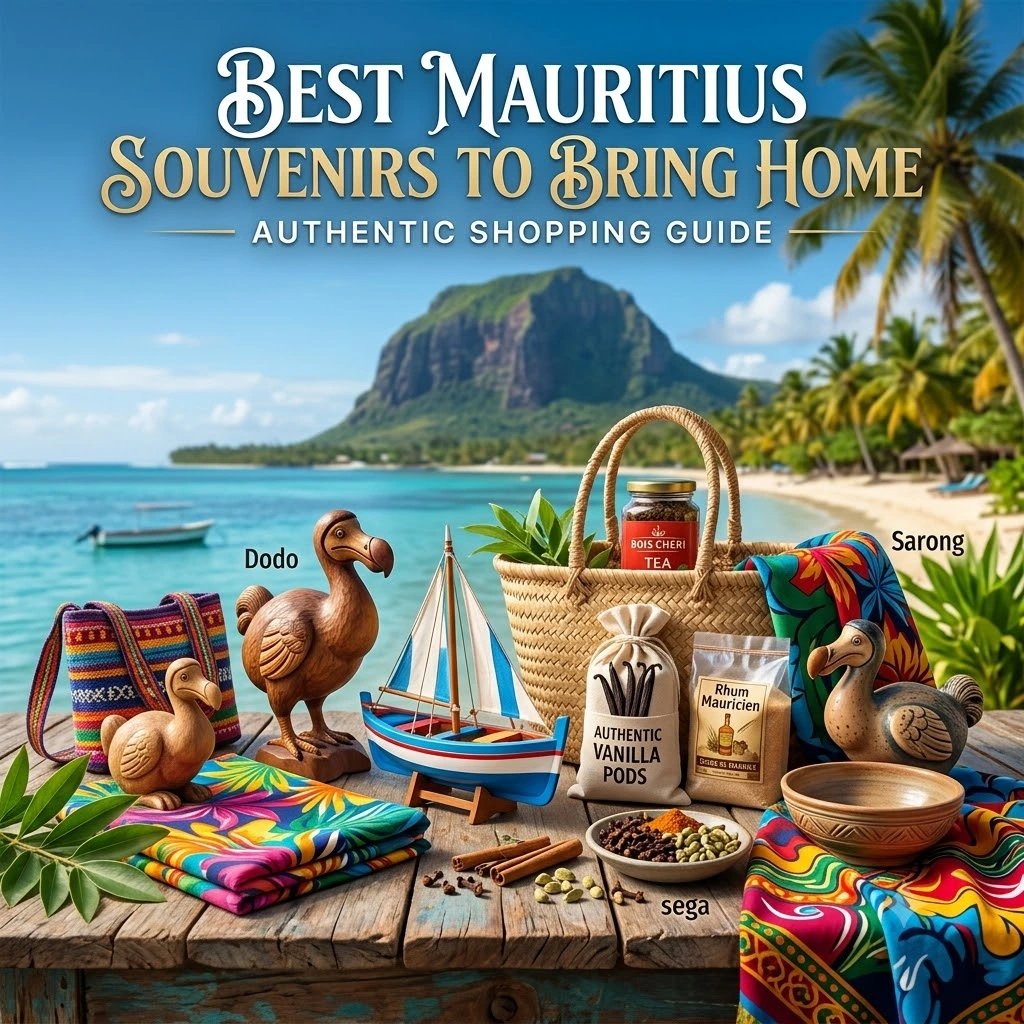
Forget generic beach resort trinkets. Mauritius shopping means investing in authentic “Made in Moris” craftsmanship spanning hand-carved ship models, volcanic ceramics, agricultural rum, and traditional woven baskets unavailable anywhere else globally.
Budget travelers find quality souvenirs from $2 vanilla tea through mid-range handcrafted baskets ($5-76) to luxury ebony sculptures ($54-326+) and pearl jewelry ($98-1,304+).
Every price point delivers genuine island artistry supporting local families, cooperatives, and centuries-old techniques threatened by mass-market imports.
Please Note:
Prices and exchange rates may vary depending on suppliers and market conditions.
Authentic Handicrafts Worth Your Suitcase Space
Teak & Mahogany Ship Models – Maritime Heritage
Mauritius’ signature souvenir replicates famous vessels (Victory, Bounty) using original museum blueprints. Craftsmen hand-assemble hundreds of tiny components (rigging, brass nails, weathered precious woods), requiring weeks to months of construction per model. Single frigates showcase meticulous precision impossible in mass production.
Where: Voiliers de l’Océan, Le Port (Curepipe workshops, watch artisans work)
Cost: $65-2,175 (3,000-100,000 MUR) depending on size/complexity
Why: Investment artwork increasing value over time, unavailable elsewhere globally
Pandanus Woven Baskets – Eco-Friendly Tradition
Hand-woven by vacoas weavers (primarily women cooperatives) using sun-dried pandanus leaves harvested island-wide. Unique weaves create breathable, moisture-resistant baskets lasting years, unlike Asian mass-produced alternatives. Geometric patterns reflect tropical nature, combining natural fibers with colorful threads.
Where: Port Louis Central Market handicraft section, Vacoas women’s cooperatives, Rodrigues Island boutiques
Cost: $5-17 (250-800 MUR) for small accessories, $33-76 (1,500-3,500 MUR) for large beach baskets
Why: 100% biodegradable, supports vanishing crafts, brings tropical warmth home
Ebony & Rosewood Sculptures – Protected Luxury Wood
Strictly regulated due to species protection. Authentic ebony (extremely heavy, sinks in water, cold touch, deep metallic black when polished) is primarily carved into dodo figures symbolizing island heritage. Rosewood delivers a warm reddish grain alternative.
Critical: Requires an official export certificate from the seller confirming legal origin; without it, customs confiscates the sculpture with heavy fines. Beware painted wood fakes (shoe polish black stain).
Where: Curepipe antique shops, Black River arts/crafts galleries
Cost: $54-326+ (2,500-15,000+ MUR) depending on size/complexity
Why: Rare luxurious material, virtually indestructible, gains luster over the years
Chamarel Ceramics – Volcanic Landscape Art
Hand-formed clay inspired by Chamarel Seven Coloured Earth geological wonder, vessels, vases, figurines painted/glazed purple, ochre, red, brown shades echoing volcanic ash layers. Endemic dodo bird motifs are frequent. Traditional kiln firing creates unique texture and fade-resistant colors.
Where: Chamarel village workshops, Cascavelle Shopping Mall
Cost: $13-26 (600-1,200 MUR) for small bowls/figurines, $65-152 (3,000-7,000 MUR) for large vases
Why: Captures island geology uniquely, functional art, each piece one-of-a-kind color scheme
Food & Drink Souvenirs Capturing Island Flavors
Mauritius culinary offerings blend Indian spice, French elegance, and African exuberance into authentic flavors packaged travel-ready:
1. Bois Chéri Vanilla Tea: Oldest plantation (est. 1892), black tea, naturally flavored, authentic orchid vanilla (not synthetic)
Cost: $2-3.50 (100-160 MUR) per 125g pack
2. Chamarel Agricultural Rum: Premium spirits distilled from fresh sugarcane juice (not molasses), aged in oak cognac/wine barrels
Cost: $26-61 (1,200-2,800 MUR) per 700ml bottle
3. St. Aubin Vanilla Pods: Hand-pollinated, months-long drying, fleshy, plump pods filled with aromatic seeds
Cost: $9-13 (400-600 MUR) per 3-pod bunch
4. Victoria Pineapple Jam: World’s sweetest variety grown in volcanic soil, artisan versions with pink peppercorns/lemongrass
Cost: $5-9 (250-400 MUR) per jar
5. Piment Erasé Chili Paste: Mauritian street fire: crushed chilies, garlic, ginger, lemon, oil (accompanies every meal)
Cost: $2.60-4.35 (120-200 MUR) per jar
6. Chamarel Coffee: Only commercially grown Mauritius coffee, unique Arabica/Robusta blend, volcanic soil, mineral-rich
Cost: $7.60-11 (350-500 MUR) per 250g
7. Muscovado/Demerara Sugar Sets: Fifteen sugar varieties, different textures/colors/flavors (molasses through toffee notes)
Cost: $3-5 (150-250 MUR) decorative tasting tins
8. Tamarin Sea Salt: Naturally mined salt pans, sun/wind evaporated, often mixed with local herbs/dried chili
Cost: $2-4 (100-180 MUR) per package
Modern Curated Souvenirs & Designer Finds
Contemporary Mauritian brands blend tradition with modern design. Available My Pop-Up Store (Cap Tamarin, Bagatelle Mall):
- API Accessories: Colorful notebooks, cases featuring dodo, tropical flora (stationery lovers)
- Lyféria/Brabant T-shirts: Graphic designs, cultural nods, island nonchalance ($15-30)
- Atelier HDS Ceramics: Coral/dodo-motif tableware, contemporary tropical dining
- Pigment it: Hand-painted mugs/plates spreading color joy every meal
- Geneviève Dupré: Embroidered textiles inspired by Mauritius nature/colors
Dodo merchandise everywhere. Extinct 17th-century bird became island symbol, appearing on T-shirts, mugs, statues, jewelry, practically everything touristy yet authentically Mauritian cultural icon.
What You Can Not Bring Home From Mauritius (Customs Violations)
There are some strict prohibitions for protecting the unique ecosystem of Mauritius. Ignorance doesn’t excuse heavy fines/confiscation:
Absolutely Forbidden:
- Shells, coral fragments, white sand: Even dead/beach-found pieces are illegal without Ministry of Fisheries permission, airport X-rays detect, immediate confiscation + fines
- Ebony without a certificate: Protected wood requires a personalized export permit from certified workshops
- Exotic leather without CITES: Fish skin (marlin), crocodile products need official documentation confirming legal controlled farming
- Plants/seeds without phytosanitary certificate: Endemic species protection (processed products like vacuum-packed vanilla/tea exempt)
Safe rule: Avoid animal/mineral origin items from markets without documentation. Invest in certified galleries ensuring legitimacy, ethical preservation support, stress-free customs clearance.
Smart Shopping Strategies & Payment Tips
Haggling Culture (Know When & Where)
DO NOT haggle: Fixed-price stores, malls (Bagatelle, Cascavelle), boutiques, supermarkets. Prices clearly marked. Negotiation is inappropriate.
DO haggle: Port Louis/Mahébourg markets, roadside craft stalls. Vendors quote 20-40% higher, expecting a polite negotiation ritual. Approach respectfully (smiling conversation, not aggressive reduction), achieving attractive final pricing.
Payment Methods
Cards accepted: Hotels, restaurants, large malls, designer boutiques (Visa/Mastercard contactless works flawlessly)
Cash essential: Markets, street vendors, small workshops (terminals rare, MUR banknotes enable haggling, often receive additional discount, avoiding card transaction fees)
Tax-Free Shopping Advantage
15% VAT refund available for purchases exceeding 2,300 MUR (~$50), single seller. Shop stores marked “Tax Refund” logo, request a special invoice with QR code, collect the refund at the airport MRA (Mauritius Revenue Authority) counter after passport control. Makes luxury jewelry, textiles, and ship models exceptionally cost-effective versus other destinations.
Best Shopping Destinations by Category
| Location | Best For | Why Visit |
| Port Louis Central Market | Woven baskets, handicrafts, street food | Authentic local prices, women’s cooperatives |
| Curepipe | Ship models, ebony workshops | Watch artisans work, factory showrooms |
| Floréal | Textiles, cashmere, embroidery | Factory outlets, artisan boutiques, premium quality |
| Chamarel | Ceramics, rum distillery, coffee | Volcanic-inspired crafts, distillery tours/tastings |
| Bagatelle Mall | My Pop-Up Store, modern brands | Curated designer edit, air-conditioned comfort |
| Grand Baie | Pearl jewelry, resort wear | Upscale salons, international brands |
Coordinating multi-stop shopping tours across the island efficiently? Professional transportation services eliminate rental car navigation stress. MoRide coordinates seamless market-to-mall-to-workshop routes, maximizing shopping time while minimizing logistical headaches throughout your souvenir-hunting adventure.
Beyond these primary destinations, Mauritius offers dozens of additional shopping venues. From sprawling modern malls stocking international brands to vibrant coastal markets selling fresh produce alongside handicrafts. Detailed in our comprehensive shopping guide covering opening hours, payment methods, and insider navigation tips for maximizing your shopping experience in Mauritius.
Frequently Asked Questions
Can I bargain at the Mauritius markets?
Yes, Port Louis and Mahébourg markets expect polite haggling. Start 20-40% below quoted price, smile, negotiate respectfully, achieving 15-25% final discounts typically.
Do I need certificates for souvenirs?
Ebony sculptures, exotic leather goods, and expensive jewelry require certificates. Seller provides documentation confirming legal origin, ensuring smooth customs clearance, avoiding confiscation/fines.
Are shells and coral allowed in luggage?
Absolutely not. Even beach-found dead shells illegal without Ministry permission. Airport X-rays detect, immediate confiscation, plus heavy fines, are enforced strictly to protect the ecosystem.
What’s the best Mauritius food souvenir?
Vanilla tea ($2-3), agricultural rum ($26-61), vanilla pods ($9-13) combine affordability, authenticity, and packability. Flavors lasting months, recreating island culinary experiences at home.
Where do locals actually shop?
Port Louis Central Market, Vacoas cooperatives, Curepipe workshops, avoid airport duty-free for handicrafts (overpriced, limited authentic selection), prioritize certified artisan galleries supporting families directly.
Conclusion
Mass-market souvenirs offer immediate gratification at $5-10 price points, but they’re identical to trinkets sold in Bali through the Maldives, manufactured continents away, contributing nothing to island preservation beyond retailer markup. Authentic Mauritian crafts demand patience (ship models take months), research (ebony certificates mandatory), and investment (quality costs fairly), yet they deliver irreplaceable uniqueness impossible to replicate anywhere globally, while directly supporting families, traditions, and ecosystems tourism dollars should protect, not exploit.
The debate isn’t price versus value. It’s whether your suitcase carries disposable clutter or meaningful connections to the hands, soil, and spirit of the island that welcomed you.

