
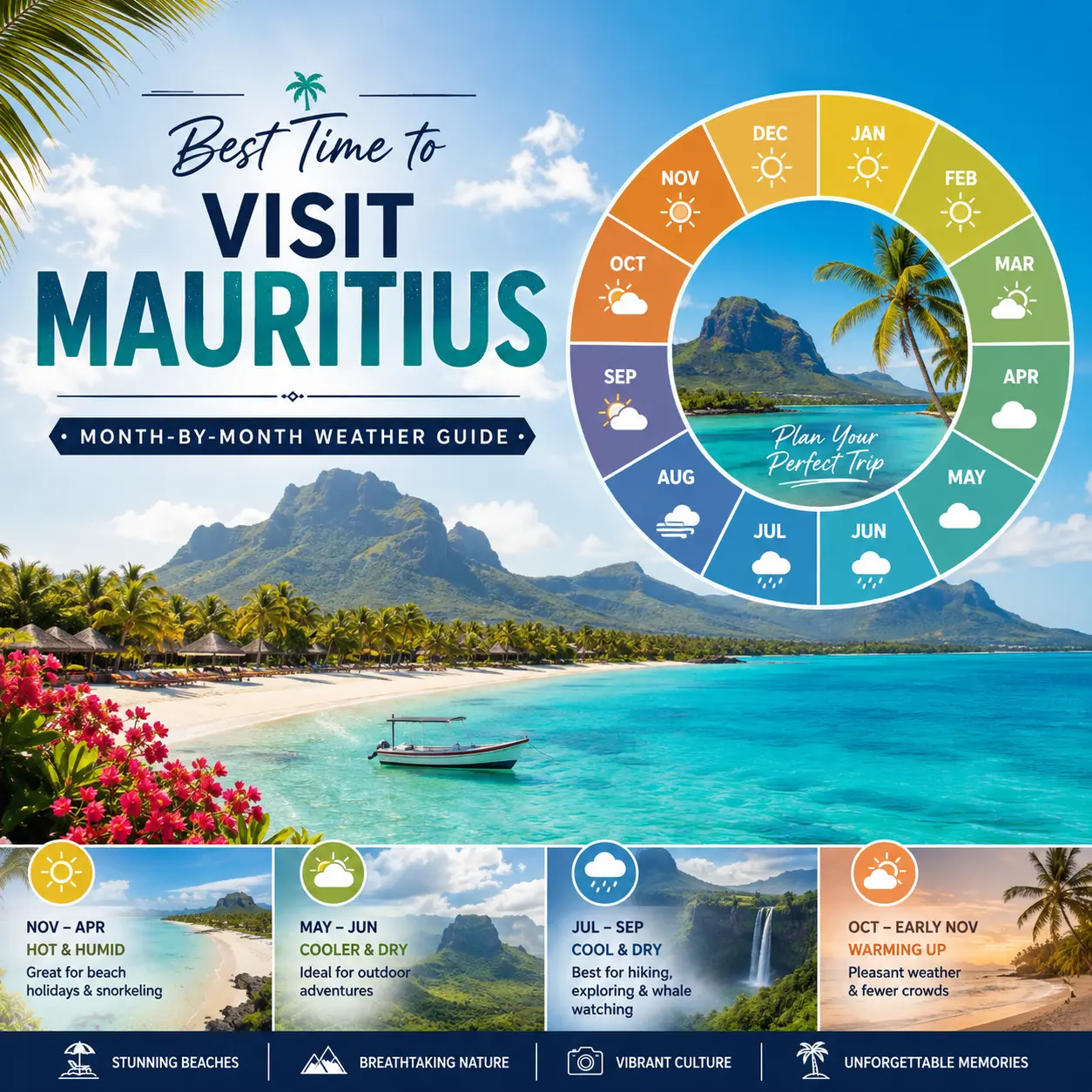
The best time to visit Mauritius is from May to December. This duration offers the best Mauritius weather, combining dry sunny days, calm ocean conditions, and comfortable temperatures. Specifically, September to November delivers an ideal balance of warm weather (24-28°C), lower humidity, minimal rainfall, and pre-peak-season pricing before December holiday crowds arrive.
Planning your Mauritius escape requires understanding when tropical perfection meets practical travel. The island delivers year-round warmth averaging 25-30°C, yet seasonal variations dramatically affect beach conditions, water sports possibilities, and crowd levels across northern Grand Baie resorts, southwestern Le Morne peaks, eastern Belle Mare lagoons, and central Chamarel mountains.
Best Overall Time: May to December (Dry Season)
The best time to visit Mauritius spans May through December when southeast trade winds bring dry, sunny weather across eight consecutive months. The temperature reaches a maximum of 35°C, creating perfect beach conditions without oppressive humidity or afternoon tropical downpours disrupting outdoor activities.
This extended dry season splits into two distinct periods: cooler winter months (May-August) ideal for hiking, surfing, and avoiding intense heat, plus warmer spring-summer transition (September-December) delivering classic tropical beach vacation weather with calm waters perfect for diving and snorkeling.
May-December Weather Advantages:
| Month Range | Temperature | Rainfall | Best Activities |
| May-August | 19-26°C | Minimal (50-100mm) | Hiking, surfing, kite-surfing |
| September-November | 24-28°C | Low (50-75mm) | Diving, snorkeling, and beach relaxation |
| December | Max 35°C | Increasing (150mm) | Water sports, swimming, turtle watching |
September through November represents the absolute best Mauritius visiting window. Dry warm weather combines with pre-peak-season tranquility, strong trade winds die down, enabling comfortable eastern beach access, and temperatures rise, welcoming summer without December’s humidity spike or January’s cyclone risks.
October ranks as the driest month on record, creating optimal conditions for exploring Mauritius’ amazing attractions, from Chamarel waterfalls to Black River Gorges hiking without rain interruptions.
Peak Season: October to April (Hot & Humid)
Peak season tourism spans October through April when European winter escapees seek guaranteed sunshine and warm ocean temperatures. December through March delivers the hottest weather (max 35°C) with significantly warmer sea temperatures perfect for extended swimming, scuba diving, windsurfing, and kayaking, yet January–March cyclone season brings the highest rainfall risk (200-280mm monthly), afternoon thunderstorms, and potential tropical storm disruptions requiring flexible travel insurance.
December marks a busy month globally, mirroring Mauritius tourism patterns. Humidity levels increase, heavy showers occur regularly (typically late afternoon), accommodation prices peak, and popular hotels require 3-6 months’ booking to secure availability. Sea temperature warmth creates excellent diving conditions for seasonal turtle watching (Hawksbill and Green turtles visible November–February), while longer sunshine hours offset increased rainfall concentrated in short afternoon bursts, clearing within hours.
Peak Season Considerations:
- December-January: Highest prices, maximum crowds, booking essential
- Sea Temperature: Warmest swimming conditions
- Rainfall Pattern: Heavy afternoon showers (clear mornings for the beach)
- Cyclone Risk: January-March (monitor weather forecasts closely)
- Best Beaches: Western/northern coasts (sheltered from storms)
Month-by-Month Mauritius Weather Breakdown
January to March: Hot, Humid & Cyclone Season (Avoid)
January ranks as the hottest and wettest month (29°C, 230-255mm rainfall) with overflow Christmas holidaymakers creating a bustling atmosphere. Heavy afternoon rainfalls are expected, torrential storm possibilities exist, and cyclone season peaks require weather monitoring and flexible plans.
February continues a hot, humid, rainy pattern (29°C, 255-280mm rainfall) with rain clearing after a few hours, yet beach holiday conditions remain suboptimal. Fewer holiday crowds offer a silver lining for budget travelers accepting weather trade-offs.
March humidity persists with less rain than January-February (29°C, 200-230mm rainfall), while Holi Festival (Festival of Colours) honors Hindu deity Lord Krishna through vibrant powder-covered street celebrations, creating a jovial atmosphere. Attendees line the streets, covering themselves with colorful powder during the annual March festivities celebrated across the island’s 48% Hindu population communities.
January-March Weather Summary:
| Location | Temperature | Rainfall | Conditions |
| Grand Baie (North) | 29°C | 230-255mm | Hot, humid, afternoon storms |
| Chamarel Mountains | 27°C | 255-280mm | Cooler, heavy mountain rainfall |
| Port Louis (Capital) | 29°C | 230-255mm | Hot, humid, cyclone risk |
| Bel Ombre (South) | 27°C | 255-280mm | Slightly cooler, wet season |
April: Transition Month & Easter Crowds
April delivers hot, humid weather (28°C, 175-200mm rainfall), marking a great time for sun seekers despite Easter holiday crowds increasing beach occupancy. Plan outside the Easter period for quieter beaches, while April marks the optimal surfing and snorkeling season onset with crystal-clear waters and building wave conditions. Water sports enthusiasts capitalize on improving ocean conditions before winter trade winds strengthen.
May to August: Cool, Dry Winter (Best for Activities)
May officially starts Mauritius winter, bringing comfortable mid-range temperatures (24-27°C, 100-130mm rainfall), lifted humidity, and reasonable accommodation specials. Evenings cool after sunset, requiring warmer clothing for outdoor dining, while northern beach zones maintain pleasant daytime conditions perfect for swimming and sunbathing without intense heat exhaustion.
June brings cooler weather (23-25°C, 75-100mm rainfall) with strong trade winds, increasing hot-weather preference; travelers may find June too cool compared to the humid January-March period, while evening temperatures drop, requiring jackets for beachside activities. Kite-surfers consider June a perfect month, maximising wind conditions at Le Morne’s world-class spots.
July continues the cooler trend (22-24°C, 75-100mm rainfall) with northern island locations (Grand Baie, Trou aux Biches, Pereybere) offering the best weather during this period. Lower temperatures coincide with Northern Hemisphere school holidays, creating a popular travel period despite cooler conditions compared to summer months.
August delivers the mildest temperatures, zero rain, and ideal sunny days without intense heat (22-24°C, 75-100mm rainfall). Western and northern coasts provide the most sheltered beaches from wind, while Ganesh Chaturthi Festival honors Elephant God Ganesh through statues appearing across the island during August festivities celebrating Hindu traditions among the island’s Indo-Mauritian majority.
May-August Activity Recommendations:
- Best For: Hiking Le Morne, Black River Gorges trails, water sports
- Beach Choice: West/North coasts (Flic en Flac, Grand Baie – sheltered)
- Avoid: East/South beaches (strong winds, rougher seas)
- Pack: Light jacket for evenings, reef-safe sunscreen
- Festivals: Ganesh Chaturthi (August)
September to November: Perfect Weather Window
September marks the unofficial peak season start (23-25°C, 50-75mm rainfall) when strong trade winds die down, temperatures rise, welcoming summer, and longer sunshine days arrive, quiet beaches persist, flight prices remain reasonable, accommodation discounts are available, and Mauritius tours operate in optimal conditions before December crowds.
October ranks as the driest month on record (24-27°C, 50-75mm rainfall), creating the busiest period at frequented destinations. The Hindu Diwali Festival (Festival of Lights) illuminates the island with candles and lamps during October festivities, while perfect weather conditions attract visitors seeking guaranteed sunshine without cyclone risks or afternoon thunderstorms disrupting plans.
November temperatures rise with humidity increasing significantly (25-28°C, 75-100mm rainfall). More sunshine hours offset rainfall increase, while excellent scuba diving conditions emerge, particularly for seasonal turtle watching, as Hawksbill and Green turtles appear regularly around coral reefs and marine parks.
September-November Ideal Conditions:
| Advantage | Details |
| Weather | Warm, dry, low humidity (perfect beach days) |
| Crowds | Pre-peak season (quieter than December-March) |
| Pricing | Reasonable flights, accommodation specials |
| Ocean | Calm waters (best diving, snorkeling visibility) |
| Activities | All outdoor activities require optimal conditions |
December: Summer Arrives & Holiday Crowds
December humidity increases with heavy late-afternoon showers, a regular occurrence (max 35°C, 150-200mm rainfall). Sea temperature significantly warms, making perfect water sports conditions for scuba diving, windsurfing, kayaking, and swimming, yet accommodation requires planning due to global holiday demand, creating booking challenges for last-minute travelers.
Regional Weather Variations Across Mauritius
Northern Coast (Grand Baie, Trou aux Biches): Most sheltered year-round from southeast trade winds, experiencing less rainfall and calmer conditions May-December. Best choice for consistent beach weather regardless of season.
Western Coast (Flic en Flac, Tamarin, Le Morne): Sheltered from trade winds, spectacular sunset views, ideal July-August when eastern beaches experience the strongest winds. Le Morne becomes a kite-surfing paradise during the June-August wind season.
Eastern Coast (Belle Mare, Palmar, Trou d’Eau Douce): Experiences the strongest trade winds in July-August, creating rougher seas and windier beach conditions. Avoid July-August for calm swimming; visit September-June for pristine lagoon tranquility and Île aux Cerfs catamaran access.
Southern Coast & Mountains (Chamarel, Bel Ombre): Cooler temperatures year-round due to elevation (Chamarel 400m above sea level), higher rainfall particularly January-March. Best visited May-November for Chamarel Seven Coloured Earth and waterfall exploration without heavy mountain rains.
Best Time for Specific Activities
Diving & Snorkeling: September-December (calmest, clearest waters, warmest sea temperature, 20-30m visibility)
Surfing: April-June, October-November (consistent swells, manageable winds, Tamarin Bay optimal)
Kite-Surfing: June-August (strongest winds at Le Morne, world-class conditions)
Hiking: May-October (cooler temperatures 19-26°C, minimal rainfall, Le Morne and Black River Gorges trails comfortable)
Whale Watching: July-October (humpback whales migrate past the western coast)
Turtle Watching: November-February (Green and Hawksbill turtles nesting season)
Budget Travel: May-June, September (shoulder season pricing, fewer crowds, excellent weather)
There are more amazing things to do in Mauritius that you can explore and enjoy better with MoRide!
Final Recommendations: When Should You Visit?
Best Overall Experience: September-November combines ideal weather (24-28°C), minimal rainfall (50-75mm), calm ocean conditions, pre-peak pricing, and comfortable humidity, a perfect window for first-time visitors maximizing beach relaxation, water sports, and island exploration without weather concerns or crowd frustrations.
Best Budget Value: May-June delivers excellent weather (23-27°C), minimal rainfall, reasonable accommodation rates, and uncrowded beaches. Ideal for cost-conscious travelers accepting slightly cooler evening temperatures, requiring light jackets for outdoor dining.
Best for Guaranteed Heat: December-March provides the hottest temperatures (max 35°C) and the warmest sea swimming despite cyclone risks and afternoon thunderstorms. Suited for travelers prioritising maximum heat over weather stability and willing to monitor forecasts during the January-March cyclone season.
Avoid entirely: January-March presents the highest cyclone risk, the heaviest rainfall (230-280mm monthly), afternoon storm disruptions, and suboptimal beach conditions, unless attending Holi Festival (March) or accepting significant weather trade-offs for lower shoulder-season pricing.
Conclusion
Your perfect Mauritius timing balances weather priorities, activity preferences, and budget considerations, whether chasing September’s perfect beach days, May’s hiking-friendly coolness, or December’s turtle-watching warmth. Strategic planning transforms good holidays into unforgettable tropical escapes.
MoRide’s reliable island transportation operates year-round, connecting hotels to attractions regardless of season, ensuring seamless exploration from rainy-season indoor cultural sites to dry-season mountain hikes and coastal adventures across all weather windows.

