
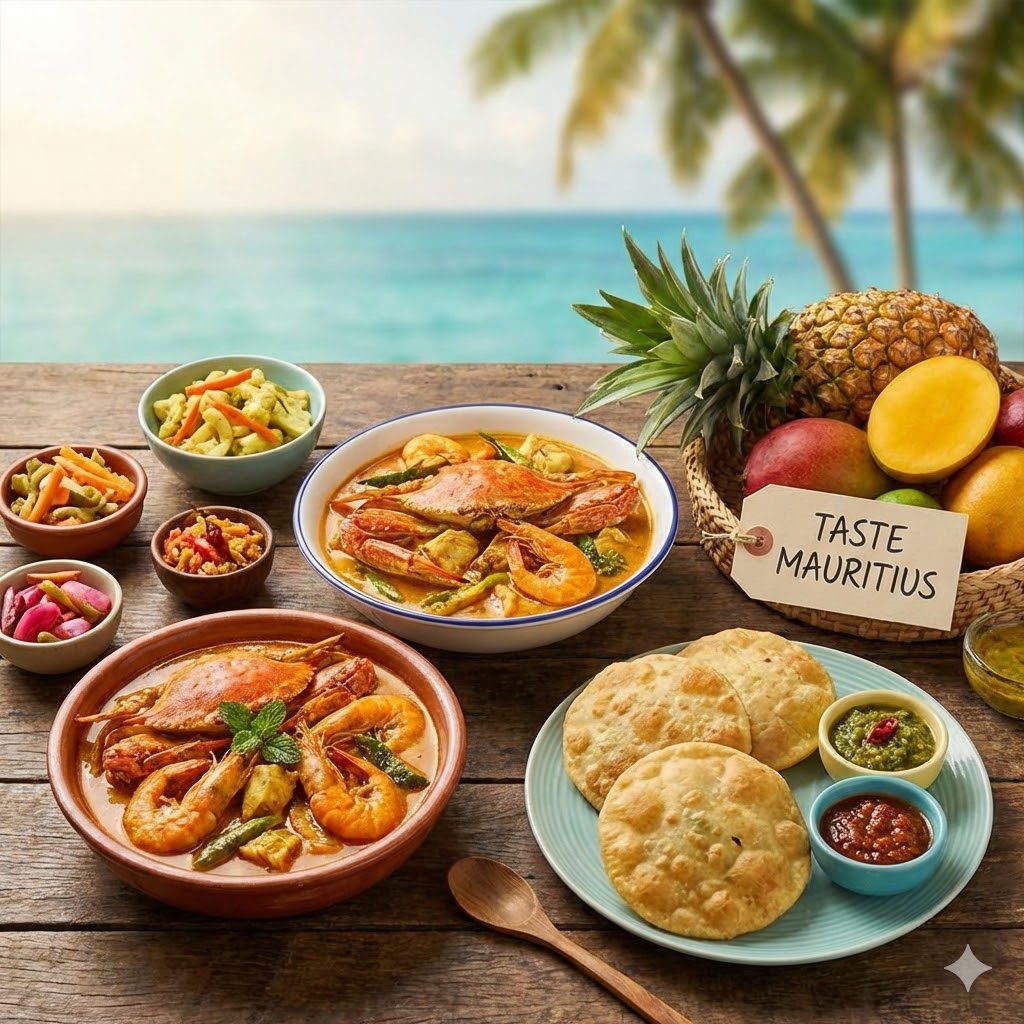
If you’re already in or planning your trip to Mauritius, you must be wondering what to eat in Mauritius.
Obviously, you would never want to leave an amazing, vibrant, & multicultural blend of Mauritian cuisine, which contains:
- Dholl Puri (Dhal Puri) wraps, bursting with curry.
- Spicy gateaux piment fritters.
- Fragrant biryani with tender meat & spices.
- Tangy rougaille stew. Pure comfort food.
- Steaming boulettes in flavourful broth.
- Octopus curry that melts in your mouth
- Fresh tropical fruits dusted with chilli salt.
- Creamy Alouda drinks. Sweet & refreshing.
- And a lot more.
Let’s take a deep dive into these amazing foods to eat in Mauritius.
Discover why this island paradise ranks among the world’s most exciting culinary destinations.
- Where French techniques meet Indian spices
- Chinese dim sum traditions blend with African soul food
- Creole creativity transforms simple ingredients into unforgettable flavours
Iconic Mauritian Street Food: The Gajak Experience
1. Dholl Puri (Dhal Puri): Mauritius’ National Treasure
Dholl Puri (also called Dhal Puri or Dall Puri) is Mauritius’ undisputed street food champion. A thin, soft flatbread stuffed with seasoned ground yellow split peas, wrapped around butter bean curry, tangy rougaille (tomato-based sauce), and fiery coriander chutney.
Each bite delivers layers of texture: the pillowy bread yielding to creamy curry, punctuated by sharp pickle crunch and herbaceous heat.
Why It’s a Must-Try:
Dholl Puri (or Dall Puri) isn’t just food. It’s cultural identity wrapped in flatbread. If you eat only one thing in Mauritius, make it this. The complexity of flavours, the satisfaction of street food done right, and the connection to 200 years of labour history.
Do You Know Where Dholl Puri Came From?
Dholl Puri (Dhal Puri) was brought by Bihari indentured labourers in the 1800s. Dholl Puri evolved from Indian paratha when workers couldn’t source traditional wheat flour. They adapted using locally available cake flour, creating something uniquely Mauritian. Softer than paratha, thicker than puri, perfect for the island’s humid climate.
How does Dholl Puri Taste?
Imagine soft, warm bread enveloping creamy, mildly spiced lentils. The butter bean curry adds rich, earthy sweetness. Sharp, acidic rougaille cuts through with bright tomato tang. Coriander chutney brings an herbaceous punch. Pickled vegetables provide a crisp, vinegary contrast.
The mazavaroo paste? Pure green chili fire that ignites your palate without overwhelming the symphony of flavours.
Best Places to Try Dholl Puri in Mauritius
- Dewa & Sons (Rose Hill, Port Louis): Operating since the 1960s. Legendary thin puris, perfectly balanced spicing.
- Cap Malheureux Roti Lady (Near Red Church, Trou aux Biches): Famous fish curry puris. Arrive early (sold out by 11:00 AM).
- Port Louis Central Market Area (Behind Les Jardins De La Compagnie): Multiple vendors. Look for the longest queue. Locals know the best shop, its legacy, and its taste.
Dholl Puri (Dhal Puri) Pricing in Mauritius
| Location | Price (MUR) | Price (USD) |
| Street Stalls | MUR 15-30 per puri | $0.35-$0.70 |
| Markets (Port Louis) | MUR 25-40 | $0.58-$0.93 |
| Tourist Areas (Grand Baie) | MUR 40-60 | $0.93-$1.40 |
Best Time to Eat Dholl Puri:
Dholl Puri (Dhal Puri) works for breakfast, lunch, or a snack. Locals eat it morning (07:00-09:00) or late afternoon (16:00-18:00). Avoid heavy dinner portions. Legumes cause nighttime bloating.
Recommended Portion Size:
2 puris per person for a snack. 3-4 puris constitute a full meal.
Dholl Puri (Dhal Puri) Eating Etiquette:
- Eat with hands (traditional).
- Tear puri, use as a scoop for curry.
- Mauritian-style: fold the entire puri into a wrap, bite from one end.
- No cutlery needed. Embrace the mess!
Dholl Puri Ingredients
| Component | Ingredients |
| Puri (Flatbread) | Cake flour, yellow split peas (ground), turmeric, cumin, salt, water |
| Filling (Cari Gros Pois) | Butter beans (lima beans), garlic, curry leaves, turmeric, cumin |
| Rougaille | Tomatoes, onions, thyme, garlic, ginger, chili, coriander |
| Accompaniments | Achard (pickled vegetables), coriander chutney, mazavaroo paste (green chili) |
Pro Tips For Dholl Puri in Mauritius:
- Roll very thin. Thick puris are doughy, not authentic.
- Don’t overfill with split peas. Causes tearing.
- Keep the rolled puris covered with a damp cloth to prevent drying out.
Take Care of These Things When Having Dholl Puri in Mauritius
- Pre-made puris sitting for 2+ hours (soggy, stale)
- Curry at room temp (bacterial growth risk)
- Flies hovering around the food station (contamination)
- The vendor handling the money counter, greeting & shaking hands with guests, and then serving food without washing their hands
- Pickles in open bowls are exposed to dust and insects
If it looks questionable, smells off, or has flies — walk away!
Trust your instincts.
Busy stalls with high turnover = freshest, safest food.
2. Gateaux Piment: Addictive Chili Fritters
Gateaux Piment (literally “chili cakes”) are golden-brown, marble-sized fritters made from crushed yellow split peas, spring onions, and fresh green chilies, deep-fried until the exterior crisps into a shattering shell while the interior stays impossibly fluffy.
Served plain, dunked in fiery coriander chutney, or stuffed inside fresh bread for a “chili cake sandwich,” they’re Mauritius’ answer to falafel. But spicier, crunchier, more addictive.
Why It’s a Must-Try:
Gateaux Piment represents Mauritian street food at its finest: simple ingredients transformed through technique and spice into something extraordinary. The textural contrast (crispy/fluffy), the slow-building heat, and the herbaceous freshness. It’s a flavor bomb for under 50 cents.
Do You Know Where Gateaux Piment Came From?
Tamil Hindu indentured labourers brought this recipe from South India in the 1800s, originally prepared for religious festivals. The dish transitioned from ceremonial food to an everyday street snack, becoming a Mauritian staple sold at every corner stall.
How does Gateaux Piment Taste?
Bite through the crackling, oil-kissed crust. It shatters audibly between your teeth. Inside, the split pea mixture is cloud-light, almost soufflé-like, with bursts of fresh onion sweetness and herbal coriander. Then the chili hits. Slow-building heat that tingles your tongue, intensifies, and makes your eyes water slightly.
Not painful, but exhilarating.
The coriander chutney amplifies everything: mint coolness battles chili fire, creating addictive contrast.
Where to buy Gateaux Piment?
- Port Louis Central Market: Dozens of vendors. Look for stalls with the longest queues between 10:00 and 12:00.
- Grand Baie Bazaar Area: Fresh fritters made continuously. Request “peu pimenté” (mild) if sensitive to spice.
- Flacq Market (Wednesdays, Sundays): Authentic vendors serving locals. Guaranteed quality.
Gateaux Piment Pricing in Mauritius
| Location | Price (MUR) | Price (USD) |
| Street Stalls | MUR 10-15 per piece | $0.23-$0.35 |
| Markets | MUR 10-20 | $0.23-$0.47 |
| Bread Sandwich | MUR 40-60 | $0.93-$1.40 |
Gateaux Piment Eating Etiquette:
- Eat with your hands.
- Pop the entire fritter in your mouth (one bite) or nibble if too spicy.
- Mauritian-style: stuff 4-5 fritters inside fresh bread, add chutney, eat as a sandwich.
- No shame in tearing up from the heat.
- Locals appreciate spice warriors!
Best Time to Eat:
Mid-morning snack (10:00-11:00) or afternoon (16:00-17:00). Avoid eating late evening. Heavy, fried foods disrupt sleep and cause nighttime indigestion.
Recommended Portion Size:
3-5 fritters as a snack. 6-8 fritters (in a bread sandwich) as a light meal.
Things Gateaux Piment Has Inside
| Component | Ingredients |
| Fritter Base | Yellow split peas (soaked overnight, coarsely ground) |
| Aromatics | Spring onions (chopped), fresh coriander, green chilies |
| Spices | Turmeric, cumin, curry leaves |
| Cooking | Vegetable oil (deep-frying) |
| Accompaniment | Coriander chutney, pain maison (local bread) |
Pro Tips for Gateaux Piment
- Don’t over-grind peas. Chunky texture = fluffy interior.
- Oil temperature critical: too hot = burnt exterior/raw inside; too cool = soggy, oil-soaked.
- Test with one fritter first. Adjust spice/salt if needed.
What to Watch Out For When Eating Gateaux Piment
- Dark, smoking oil (reused multiple times, carcinogens)
- Fritters sitting pre-fried (soggy, oil-soaked texture)
- Vendor near heavy traffic (exhaust fumes on food)
- Black/burnt fritters (overcooked, bitter taste)
- No visible oil temperature control (raw inside risk)
Hunting the best Gateaux Piment vendors means navigating Port Louis’ chaotic streets and crowded markets. MoRide’s Port Louis street food tour includes transportation to Central Market, Grand Baie vendors, and hidden local stalls. Stress-free exploration with insider knowledge.
WhatsApp +230 5258 0813 to book.
3. Roti Chaud (Farata): Warm Flatbread Wraps
Roti Chaud (“hot bread” or “hot roti”) is a freshly made flatbread. An iconic street food from Mauritius. Thinner than naan, flakier than chapati. Rolled warm around rougaille (tomato-chili stew), coriander chutney, and pickled vegetables. “Farata” refers to the flatbread itself, influenced by Indian paratha but made paper-thin with oil-brushed layers creating a delicate, crispy-soft texture.
Why It’s a Must-Try:
Roti Chaud showcases Mauritius’ ability to take familiar foods (Indian flatbread, Creole sauce) and create something entirely new. The flaky-soft farata texture, the bright rougaille flavours. It’s comfort food that satisfies without weighing you down.
Do You Know Where Roti Chaud Came From?
Indian indentured laborers brought roti-making traditions to Mauritius in the 1830s. The technique evolved using locally available ingredients. Lighter flour and coconut oil create Farata’s signature flakiness. Today, every neighborhood has a “roti lady” famous for her technique.
How does Roti Chaud (Farata) Taste?
The farata arrives hot, still steaming. Its surface glistening with oil, crispy-edged but pillowy-soft inside. Tear it open: layers separate like phyllo pastry. The rougaille floods in. Bright tomato acidity balanced by caramelised onion sweetness, earthy thyme, and warming ginger bite. Coriander chutney adds cool, herbal freshness.
Each bite alternates between the flatbread’s buttery richness and the rougaille’s tangy heat, punctuated by pickle crunch.
Where You Should Try Roti Chaud
- Cap Malheureux Roti Lady (near Red Church, Trou aux Biches): Legendary fish curry rotis. Locals line up by 09:00 AM. Sold out by noon.
- Rose Hill Market Area: Multiple vendors specialising in vegetarian and meat rougaille options.
- Port Louis Street Stalls (behind Les Jardins De La Compagnie): Authentic preparations, generous portions.
Roti Chaud Pricing in Mauritius
| Location | Price (MUR) | Price (USD) |
| Street Stalls | MUR 30-50 per roti | $0.66-$1.09 |
| Markets | MUR 40-60 | $0.88-$1.31 |
| Restaurants | MUR 80-120 | $1.75-$2.63 |
Roti Chaud Eating Etiquette:
- Eat with hands (traditional).
- Tear roti, use as a scoop for rougaille.
- Mauritian-style: roll the entire roti into a wrap, eat from one end.
- Accept the mess. It’s part of the experience!
Best Time to Eat:
Breakfast (07:00-09:00) or lunch (12:00-14:00). The warm, comforting flavours make it ideal morning fuel. Avoid heavy evening consumption. Refined carbs before bed disrupt sleep.
Recommended Portion Size:
1 roti chaud as a snack. 2 rotis as a full meal.
Main Ingredients of Roti Chaud:
| Component | Ingredients |
| Farata (Flatbread) | All-purpose flour, water, salt, oil (for layering) |
| Rougaille | Tomatoes, onions, garlic, ginger, thyme, chili, curry leaves |
| Accompaniments | Coriander chutney (satini), pickled vegetables, mazavaroo paste |
| Optional Add-ins | Butter bean curry, lentil dhal, potato curry |
What To Watch Out For When Having Roti Chaud
- Pre-rolled rotis stacked up (dry, stale texture)
- Rougaille sitting uncovered (flies, contamination)
- Oily puddles on the serving plate (excessive oil used)
- Vendor cart next to open sewage/garbage (odor, flies)
- Roti edges burnt black (poor heat management)
Signature Mauritian Dishes: Beyond Street Food
4. Mauritian Biryani: Fragrant Layered Rice
Mauritian Biryani is a fragrant, aromatic rice dish where basmati rice and marinated meat (chicken, beef, lamb, or fish) are layered and slow-cooked together, infused with saffron, cinnamon, cardamom, and caramelised onions.
Unlike its Indian counterpart, Mauritian biryani incorporates local twists: fresh coriander and mint are used abundantly, potatoes are added for bulk, and the spice profile leans slightly sweeter with prominent cinnamon notes.
Why It’s a Must-Try:
Mauritian Biryani represents the island’s ability to honor tradition while creating something distinctly local. The French-influenced sweetness, the generous portions, the ritualistic layering. It’s a dish that demands time, skill, and love. One bite transports you through centuries of culinary evolution.
Do You Know Where Mauritian Biryani Came From?
Brought by Hyderabadi and Bihari Muslim immigrants in the 1800s-1900s, biryani evolved in Mauritius to incorporate French and Creole influences. The dish transitioned from royal celebration food (reserved for weddings, Eid) to family gatherings and restaurant staples. Today, every Mauritian family claims their grandmother makes the “authentic” version.
How does Mauritian Biryani Taste?
The biryani arrives steaming, each grain of rice separate yet glistening with ghee, stained golden-yellow from saffron. Fork through the layers: tender, fall-off-the-bone meat emerges, impossibly juicy from yogurt marination.
The rice gives a pleasant smell of floral saffron, warming cinnamon, woody cardamom, and peppery clove. A symphony of aromatics. Crispy fried onions add sweet crunch. Mint provides cooling freshness against the spice heat. Potatoes, cooked until creamy inside, soak up the complex masala.
Each bite is balanced: rich but not heavy, spiced but not burning, aromatic but not overwhelming.
Best Places to Try Mauritian Biryani
- Flacq Market (Wednesdays, Sundays): Authentic home-style biryani sold by local families. MUR 150-250 per portion.
- Vacoas Market: Similar quality, less touristy.
- Local Mauritian Restaurants: Most establishments serve biryani on weekends (Friday-Sunday). It’s a time-intensive dish, rarely made daily.
How Much Mauritian Biryani Costs?
The price of Mauritian Biryani depends on where you’re buying it. Either in a street market, a local market, or at a hotel restaurant.
| Location | Price (MUR) | Price (USD) |
| Street Markets | MUR 150–250 | $3.29–$5.48 |
| Local Restaurants | MUR 250–400 | $5.48–$8.76 |
| Hotel Restaurants | MUR 450–700 | $9.86–$15.33 |
Mauritian Biryani Eating Etiquette:
- Traditionally eaten with hands (right hand only).
- Mix rice, meat, and onions together on a plate.
- Flavors blend.
- Scoop with fingers, form a small ball, and eat.
- Cutlery is acceptable in modern settings.
- Always taste before adding pickles/chilies.
- Good biryani needs no enhancement.
Best Time to Eat:
Lunch (12:00-14:00) or dinner (19:00-21:00). Biryani is celebration food. Best shared with family/friends. Avoid eating large portions late evening. Rich food disrupts sleep and causes morning sluggishness.
Recommended Portion Size:
250-350g per person as a main course. Biryani is rich. Smaller portions satisfy.
What Mauritian Biryani Contains
| Component | Ingredients |
| Rice | Basmati rice (aged, long-grain), saffron, ghee |
| Meat | Chicken, beef, lamb, fish, or prawns (bone-in for flavor) |
| Marinade | Yogurt, garlic, ginger, chili, turmeric, cumin, coriander powder |
| Aromatics | Cinnamon sticks, cardamom pods, cloves, bay leaves, star anise |
| Vegetables | Potatoes (cubed), tomatoes, onions (fried crispy) |
| Garnish | Fresh coriander, mint, fried onions, boiled eggs |
| Accompaniments | Piment confit (oil-marinated chilies), pickles, raita (yogurt sauce) |
Be Safe When Eating Mauritian Biryani
- Lukewarm biryani (bacterial growth after 2 hours)
- Sour smell from rice (spoiled, beginning fermentation)
- Meat with pink centers (undercooked, salmonella risk)
- Rice clumped, sticky, mushy (old rice, poor cooking)
- Restaurant with empty tables (low turnover = old food)
5. Rougaille: Creole Tomato Stew
Rougaille (pronounced “roo-guy”) is Mauritius’ quintessential Creole sauce. A vibrant tomato-based stew simmered with garlic, ginger, thyme, onions, and fresh chilies, traditionally paired with salted fish, sausages, or chicken.
Lighter and brighter than Indian curries, rougaille showcases French technique (slow-cooked tomato bases) merged with African heat and aromatics.
Why It’s a Must-Try:
Rougaille embodies Creole soul food. Simple ingredients, including complex flavors, and deep history. It’s the dish grandmothers make when you visit, mothers cook for Sunday lunch, and friends prepare for gatherings. One spoonful tells Mauritius’ story: resilience, creativity, community.
Do You Know Where Mauritian Rougaille Came From?
Rougaille emerged from Creole slave communities during French colonial rule (1715-1810). Limited ingredients. Tomatoes, onions, preserved fish. All were transformed through technique into complex, satisfying meals.
The name derives from French “roux” (cooked fat-flour base), though Mauritian rougaille doesn’t use flour, instead relying on reduced tomatoes for body.
How Does Mauritian Rougaille Taste?
The rougaille simmers into deep crimson-red, tomatoes breaking down into thick, chunky sauce. Fork through: tender sausage or flaky salted fish emerges, infused with the sauce’s complexity. Bright tomato acidity hits first.
Fresh, almost sweet.
Followed by savory garlic-ginger depth. Fresh thyme adds earthy, floral notes. Chilies build slowly, warming rather than burning.
The sauce coats your tongue, leaving a lingering heat that makes you reach for rice to soothe, then immediately take another bite. It’s addictive: comforting, vibrant, alive.
Where to Try Mauritian Rougaille
- Local Mauritian Homes: Cooking classes (Veranda Resorts, Airbnb Experiences) teach authentic rougaille preparation.
- Small Family Restaurants: Port Louis, Rose Hill, Mahébourg. Ask for “rougaille du jour” (rougaille of the day).
- Guesthouses: Many BnBs serve home-cooked rougaille for dinner.
Mauritian Rougaille Pricing in Mauritius
| Location | Price (MUR) | Price (USD) |
| Street Vendors (rare) | MUR 80–120 | $1.75–$2.63 |
| Local Restaurants | MUR 180–280 | $3.94–$6.13 |
| Hotel Restaurants | MUR 350–500 | $7.67–$10.95 |
Mauritian Rougaille Eating Etiquette:
- Mix rougaille with rice on a plate.
- Eat with a spoon and fork (or hands if comfortable).
- Mauritians mop up every drop of sauce
- Wasting is disrespectful.
- Compliment the cook enthusiastically.
- Rougaille recipes are family treasures!
Best Time to Eat Mauritian Rougaille:
- Lunch (12:00-14:00) or dinner (18:00-20:00).
- Comfort food ideal for family meals.
- Pair with cold beer or fresh lemonade.
Recommended Portion Size:
250-300g as a main course with rice. Rougaille is lighter than curry. Encourages second helpings.
Main Ingredients:
| Component | Ingredients |
| Base Sauce | Fresh tomatoes (or canned), onions, garlic, and ginger |
| Aromatics | Fresh thyme, curry leaves, chilies (bird’s eye or cayenne) |
| Protein Options | Salted fish (cod), sausages (Mauritian merguez), chicken, prawns |
| Seasoning | Salt, black pepper, optional sugar (balances acidity) |
| Serving | White rice, bread, or roti |
What To Avoid
- Strong fishy/ammonia smell (spoiled fish, food poisoning)
- Separated, greasy sauce (old ingredients, poor prep)
- Served lukewarm (bacteria multiply rapidly below 63°C)
- Meat/fish with slimy texture (bacterial contamination)
- Dirty cooking pots are visible (poor hygiene standards)
6. Boulettes: Mauritian-Style Dumplings
Boulettes are Mauritius’ answer to Chinese dim sum. Delicate steamed dumplings wrapped in translucent rice flour skins, filled with minced pork, chicken, fish, or vegetables mixed with chayote (chou chou). Served in light, aromatic broth with spring onions and chili sauce, or sometimes in fresh salad.
The dumpling skin becomes almost see-through when steamed properly. You can glimpse the filling through the wrapper.
Why It’s a Must-Try:
Boulettes showcase Mauritius’ Chinese heritage transformed through local ingredients. The chayote addition (purely Mauritian) creates a unique texture contrast absent in traditional Chinese dumplings.
They’re comfort food at its finest. Quick. Affordable. Deeply satisfying.
Do You Know Where Mauritian Boulettes Came From?
Cantonese immigrants brought dumpling-making traditions to Mauritius in the late 1800s-early 1900s. Working as traders and shopkeepers, they adapted recipes using local vegetables. Particularly, chayote is abundant in Mauritius.
The word “boulette” comes from French (meaning “ball” or “dumpling”), not Chinese.
This linguistic fusion reflects Mauritius’ multicultural reality. Chinese food, French name, African and Indian customers.
How Do Mauritian Boulettes Taste?
Lift the dumpling with chopsticks or a spoon. The skin quivers, barely holding together, silky-smooth and slippery.
Bite through: the wrapper dissolves on your tongue. Barely any chew. Just soft, yielding texture.
The filling bursts forward. Juicy minced pork with sweet chayote crunch, seasoned with garlic, ginger, and five-spice. The broth is clean, clear, and chicken-based with spring onion perfume.
Add chili sauce. Explosive heat. Vinegar tang. Cuts through the dumpling’s richness.
Each boulette is a perfect parcel of comfort. Light yet satisfying. Delicate yet flavorful.
Best Restaurants & Street Vendors to Try Boulette:
Chinatown in Port Louis is Boulette headquarters.
Every stall serves slightly different versions: pork, fish, vegetables, and even cheese (Mauritian innovation).
Where to Try:
- Chinatown, Port Louis: Multiple vendors clustered on Corderie Street. Arrive 10:00-11:00 AM for fresh batches.
- Marchand Boulettes (roaming vendors): Look for “marchand boulettes” signs throughout Port Louis, Rose Hill, and Quatre Bornes.
- Local Mauritian-Chinese Restaurants: Most serve boulettes as Starters or light meals.
Mauritian Boulettes Pricing
| Location | Price (MUR) | Price (USD) |
| Street Stalls (Chinatown) | MUR 10–15 per piece | $0.22–$0.33 |
| Marchand Boulettes | MUR 12–20 per piece | $0.26–$0.44 |
| Restaurants | MUR 80–150 (5–6 pieces) | $1.75–$3.29 |
Mauritian Boulettes Eating Etiquette
- Eat boulettes directly from the bowl using Chinese soup spoons or chopsticks.
- Locals eat them in two bites (too big for one, too delicate to cut).
- Sip the broth between dumplings. Palate cleanser.
- Adding chili sauce is mandatory. No judgment for drowning them in the heat.
- Street vendors serve boulettes standing.
- No seats, no fuss.
- Eat quickly while hot, return bowl, move on.
Best Time to Eat Mauritian Boulettes:
- Mid-morning snack (09:00-11:00) or lunch (12:00-14:00).
- Boulettes are light. Perfect between meals without feeling heavy.
- Avoid late evening. Broth causes nighttime bathroom trips.
Recommended Portion Size:
- 5-8 boulettes as a snack or appetiser.
- 10-12 boulettes as a full meal (with extra vegetables).
Main Ingredients:
| Component | Ingredients |
| Wrapper | Rice flour, tapioca starch, water, salt |
| Filling Options | Minced pork, chicken, fish, prawns, or vegetables |
| Vegetable Mix | Chayote (chou chou), spring onions, garlic, ginger |
| Seasoning | Five-spice powder, soy sauce, sesame oil, white pepper |
| Broth | Chicken stock, spring onions, ginger |
| Accompaniment | Chili sauce, soy sauce, vinegar |
Don’t Eat If It is:
- Pre-steamed dumplings at room temp (bacteria growth)
- Murky, cloudy broth (reused multiple times, old stock)
- Torn, broken wrappers (poor technique, old dough)
- Fishy smell from seafood filling (spoiled ingredients)
- No visible steam from bamboo baskets (not fresh-cooked)
7. Bol Renversé: Upside-Down Rice Bowl
Bol Renversé (literally “upside-down bowl”) is Mauritius’ most theatrical dish.
Stir-fried chicken, shrimp, or beef with soy-glazed vegetables piled over white rice, crowned with a perfectly fried egg, all packed into a bowl.
Then, the showstopper, the bowl, is inverted onto a plate.
The dish unveils itself. Rice dome. Vegetables cascading down. Runny yolk breaking. Golden rivers flowing.
It’s a Chinese technique meets French presentation meets Mauritian showmanship.
Why It’s a Must-Try:
Bol Renversé is pure Mauritian fun. The theatrical presentation delights kids and adults alike.
It’s one-bowl comfort food. No need for multiple dishes, complicated pairings, or formal settings.
Just pure, messy, delicious satisfaction.
Do You Know Where Mauritian Bol Renversé Came From?
Chinese immigrants working in Mauritian restaurants during the 1960s-70s created Bol Renversé as a quick, satisfying staff meal.
The inversion technique added drama, turning boring fried rice into an Instagram-worthy presentation decades before Instagram existed.
It became so popular with locals that restaurants added it to official menus.
Today, it’s a Mauritian-Chinese classic. Found nowhere else in the world.
How Does Mauritian Bol Renversé Taste?
Fork through the rice dome. It collapses, releasing steam.
The fried egg’s yolk bursts. Rich, creamy orange. Coats everything.
Stir-fried vegetables arrive next. Crunchy bok choy, sweet bell peppers, earthy mushrooms. All glazed in savory-sweet soy sauce with ginger-garlic punch.
The chicken (or shrimp) is tender, wok-seared with crispy edges.
Rice soaks up everything. The soy glaze. The egg yolk. The vegetable juices.
Each bite is different: sometimes rice-heavy and comforting, sometimes vegetable-forward and fresh, sometimes protein-rich and savory.
The dish forces you to mix everything. No component stands alone. That’s the point.
Best Restaurants & Local Eateries for Mauritian Bol Renversé
Bol Renversé is restaurant food. Rarely found at street stalls due to equipment requirements (woks, high-heat stoves).
Where to Try:
- Local Mauritian-Chinese Restaurants: Nearly every Mauritian-Chinese restaurant serves Bol Renversé. Port Louis, Rose Hill, and Quatre Bornes have the highest concentration.
- Le Capitaine Restaurant (Moka): Family-run, operating 30+ years. Generous portions, authentic technique.
- Happy Rajah (Port Louis): Budget-friendly, fast service.
- Dragon d’Or (Grand Baie): Upscale setting, air-conditioned. Reservations are recommended for weekends.
What is the Price of Mauritian Bol Renversé
| Location | Price (MUR) | Price (USD) |
| Budget Restaurants | MUR 180–280 | $3.94–$6.13 |
| Mid-Range Restaurants | MUR 300–450 | $6.57–$9.86 |
| Upscale Restaurants | MUR 500–700 | $10.95–$15.33 |
Cultural Eating Etiquette:
Mix everything together immediately. Rice, egg, vegetables, and meat.
Don’t eat components separately. The whole point is the blend.
Use a fork and spoon (or chopsticks if skilled).
Locals finish every grain. Leaving rice is wasteful.
Family-style dish. Perfect for sharing multiple bowls, trying different protein versions.
Best Time to Eat Mauritian Bol Renversé:
Lunch (12:00-14:00) or dinner (18:00-20:00).
Hearty, filling meal. Perfect after long beach days or hiking.
Avoid late evening. Rice and egg combo causes sluggish mornings.
Recommended Portion Size:
- One bowl (400-450g) as full meal.
- Bol Renversé is filling. Second servings usually unnecessary.
What You’ll Find Inside Mauritian Bol Renversé
| Component | Ingredients |
| Rice | White rice (cooked, day-old preferred) |
| Protein | Chicken, shrimp, beef, or mixed (stir-fried) |
| Vegetables | Bok choy, bell peppers, mushrooms, carrots, snow peas |
| Egg | Fried egg (runny yolk essential) |
| Sauce | Soy sauce, oyster sauce, garlic, ginger, sesame oil |
| Garnish | Spring onions, fried shallots |
| Side | Garlicky water (bouillon d’ail), chili sauce |
Alarming Cases for Bol Renversé
- Pre-made components sitting out (rice bacterial growth)
- Overcooked/hard egg yolk (pre-fried hours earlier)
- Wilted, discolored vegetables (old, not fresh)
- Oil pooling at the plate bottom (poor stir-fry technique)
- Restaurant kitchen not visible (can’t verify freshness)
8. Cari Ourite (Octopus Curry) – Tender Seafood Delicacy
Cari Ourite is Mauritius’ beloved octopus curry.
Tender octopus pieces simmered in aromatic masala sauce with turmeric, cumin, coriander, curry leaves, and fresh tomatoes.
The octopus transforms from rubbery to melt-in-your-mouth tender through slow cooking. A technique perfected by coastal Mauritian families over generations.
Lighter than meat curries, more substantial than fish curries. Cari Ourite occupies the perfect middle ground.
Why It’s a Must-Try:
Cari Ourite showcases Mauritius’ seafood mastery.
The island’s location in the Indian Ocean means fresh octopus daily. Quality impossible to replicate inland.
The slow-cooking technique transforms tough seafood into something sublime.
If you’ve only had rubbery octopus elsewhere, Mauritian preparation will change your mind forever.
Do You Know Where Mauritian Octopus Curry Came From?
Coastal fishing communities in Mauritius have caught and cooked octopus for centuries.
Indian indentured laborers brought curry-making techniques.
Creole fishermen contributed seafood preparation methods.
The fusion created Cari Ourite. Indian spice profiles applied to fresh ocean catch with French slow-cooking patience.
Today, octopus remains an affordable, accessible protein source for coastal populations while becoming a gourmet delicacy for tourists.
How Does Mauritian Octopus Curry Taste?
The octopus arrives in thick, golden-red curry sauce. Chunks of tender tentacle glistening with spice-infused oil.
Fork through: the octopus yields effortlessly. No chewiness. No rubberiness. Just soft, yielding texture like slow-braised beef.
The curry sauce coats your tongue. Earthy turmeric warmth, cumin’s smoky depth, coriander’s citrus brightness.
Fresh tomatoes provide acidity. Curry leaves add herbal, almost citrusy notes. Garlic and ginger build a savory foundation.
The octopus itself tastes mildly sweet and briny. Ocean essence without overpowering fishiness. It absorbs the curry flavors completely while maintaining its delicate seafood character.
Each bite delivers comfort and complexity simultaneously.
Best Places To Try Mauritian Octopus Curry
Cari Ourite predominantly home-cooked. Best versions come from coastal family kitchens.
Restaurants serve it, but quality varies dramatically.
Where to Try:
- Coastal Villages: Mahébourg, Trou d’Eau Douce, Grand Gaube. Local restaurants specialising in seafood curries.
- Port Louis Fish Market Area: Small eateries near the market serve ultra-fresh octopus curry (caught that morning).
- Guesthouses (Coastal Areas): Many BnBs serve home-cooked octopus curry for dinner. Ask hosts.
- Cooking Classes: Learn authentic preparation. Airbnb Experiences, Veranda Resorts cooking workshops.
How Much Does Mauritian Octopus Curry Cost?
| Location | Price (MUR) | Price (USD) |
| Local Coastal Restaurants | MUR 200–300 | $4.38–$6.57 |
| Port Louis Eateries | MUR 250–350 | $5.48–$7.67 |
| Mid-Range Restaurants | MUR 350–500 | $7.67–$10.95 |
| Hotel Restaurants | MUR 500–750 | $10.95–$16.43 |
Cultural Eating Etiquette:
Mix the curry with the rice on your plate. The curry alone is too intense.
Eat with a spoon and fork (or hands if traditional).
Suck the octopus pieces slowly. Extract every bit of curry clinging to the tentacles.
Mauritians debate “best octopus preparation,” and family recipes are closely guarded secrets.
Complimenting the cook’s octopus tenderness is the highest praise.
Best Time to Eat Mauritian Octopus Curry:
Lunch (12:00-14:00) or dinner (18:00-20:00).
Sunday family meals. Octopus curry is a celebratory food.
Pair with white rice, roti, or fresh bread.
Avoid late evening. Seafood + heavy curry disrupts sleep.
Recommended Portion Size:
200-250g of octopus curry as the main course with rice.
Octopus is extremely filling due to its high protein content. Small portions satisfy.
Main Ingredients:
| Component | Ingredients |
| Protein | Fresh octopus (cleaned, cut into chunks) |
| Masala Base | Onions, garlic, ginger, and tomatoes |
| Spices | Turmeric, cumin, coriander powder, curry leaves, chili |
| Liquids | Water or fish stock, coconut milk (optional) |
| Aromatics | Fresh thyme, bay leaves |
| Seasoning | Salt, black pepper |
| Serving | White rice, roti, or bread |
Octopus is incredibly high in protein. 28g per 100g serving. Supports muscle building, repair, and satiety.
Rich in vitamin B12 (supports nerve function, red blood cell production), iron (prevents anemia), and selenium (antioxidant, thyroid health).
Omega-3 fatty acids support heart health and reduce inflammation.
Taurine (an amino acid in octopus) benefits cardiovascular health and eye health.
Avoid if the Octopus Curry is with:
- Strong ammonia smell (spoiled octopus, dangerous)
- Rubbery, chewy texture (undercooked or bad quality)
- Curry served cold/lukewarm (bacterial contamination risk)
- Slimy octopus pieces (bacterial growth, unsafe to eat)
- Separated, oily sauce (poor quality ingredients used)
9. Mine Frite – Mauritian Fried Noodles
Mine Frite (pronounced “meen freet”) is Mauritius’ answer to Chinese chow mein.
Wheat noodles stir-fried with soy sauce, vegetables (cabbage, carrots, bok choy), and a choice of protein (chicken, shrimp, beef, or mixed).
Cooked in blazing-hot wok over high flame, creating signature “wok hei” (breath of the wok), that smoky, slightly charred flavor is impossible to replicate in home kitchens.
Why It’s a Must-Try:
Mine Frite is Mauritian fast food at its finest.
Quick, filling, affordable, and available everywhere.
The dish showcases Chinese techniques adapted to Mauritian palates. Slightly sweeter soy sauce, generous vegetables, hearty portions.
Perfect post-beach meal. Perfect hangover cure. Perfect late-night craving satisfaction.
One-dish meal format ensures balanced nutrition, including carbs, protein, and vegetables in a single serving.
Do You Know Where Mauritian Mine Frite Came From?
Hakka Chinese immigrants brought chow mein techniques to Mauritius in the early 1900s.
Working as shopkeepers and restaurant owners, they adapted recipes using local vegetables and slightly sweeter soy sauce preferred by Mauritian customers.
“Mine Frite” (French for “fried noodles”) became the local name. Another example of Chinese food, the French language, and multicultural adoption.
Today, Mine Frite is as Mauritian as it is Chinese.
How does Mauritian Mine Frite Taste?
The noodles arrive steaming, glistening with dark soy sauce glaze.
Fork through: strands separate easily, each one slick with oil and soy.
Bite down: slight resistance. Chewy but not gummy. Firm texture from high-heat frying.
Vegetables provide crunch, including crisp cabbage, sweet carrots, and tender bok choy.
The protein (chicken, shrimp) carries smoky char from wok searing.
Soy sauce dominates, salty, umami-rich, with subtle sweetness.
Garlic and ginger add aromatic depth.
Occasional chili flake delivers surprise heat.
Then you taste it: wok hei.
That elusive smokiness. Almost burnt. But not quite. The essence of high-heat Chinese cooking.
Best Restaurants & Street Vendors To Buy Mauritian Mine Frite
Mine Frite is ubiquitous. Every Mauritian-Chinese restaurant and many street vendors serve it.
Quality varies dramatically based on work technique, ingredient freshness, and hand eating intensity.
- Mauritian-Chinese Restaurants: Port Louis, Rose Hill, Quatre Bornes, Grand Baie. Nearly every establishment serves Mine Frite.
- Street Vendors: Look for vendors with woks over gas burners (portable stalls). Fresh cooking visible.
- Takeaway Shops: “Snack” restaurants specialise in fast Chinese food. Mine Frite, fried rice, spring rolls.
Mauritian Mine Frite Pricing
| Location | Price (MUR) | Price (USD) |
| Street Vendors | MUR 60–100 | $1.31–$2.19 |
| Snack Shops | MUR 80–120 | $1.75–$2.63 |
| Restaurants | MUR 150–250 | $3.29–$5.48 |
| Hotel Restaurants | MUR 300–450 | $6.57–$9.86 |
Mauritian Mine Frite Eating Etiquette:
Twirl noodles with fork and spoon (chopsticks if skilled).
Locals slurp audibly. Slurping shows appreciation. It’s not rude. It’s respect.
Mix everything together. Don’t pick out vegetables or protein separately.
Street-style: eat directly from the takeaway container while walking. No plates, no fuss.
Best Time to Eat Mauritian Mine Frite:
Lunch (12:00-14:00) or dinner (18:00-21:00).
Late-night food. Many vendors operate until midnight.
Perfect takeaway for beach picnics or hotel room meals.
Recommended Portion Size:
300-350g as a full meal.
Mine Frite is filling. Second servings are rarely needed.
Things Mauritian Mine Frite Is Made Up Of
| Component | Ingredients |
| Noodles | Fresh wheat noodles or egg noodles |
| Protein | Chicken, shrimp, beef, pork, or mixed |
| Vegetables | Cabbage, carrots, bok choy, spring onions, bean sprouts |
| Sauce | Soy sauce (dark and light), oyster sauce, sesame oil |
| Aromatics | Garlic, ginger, and optional chili |
| Cooking Oil | Vegetable oil (high smoke point for wok frying) |
When You Shouldn’t Eat Mine Frite
- Pre-cooked noodles reheated (no wok hei, bacterial risk)
- Soggy, waterlogged vegetables (poor drainage, old stock)
- Meat smells foul or sour (spoiled protein, food poisoning)
- Excessive grease pooling (cheap oil, poor technique)
- Vendor cooking on low heat (no high-heat wok flavor)
Mauritian Sweets & Snacks
10. Napolitaine – Iconic Mauritian Biscuit
Napolitaine is Mauritius’ most beloved cookie.
A pink-iced shortbread sandwich filled with raspberry or strawberry jam, topped with glacé icing and sometimes a glacé cherry.
Crisp, buttery, sweet, nostalgic. Every Mauritian grew up eating Napolitaines with afternoon tea.
Why It’s a Must-Try:
Napolitaine is pure Mauritian nostalgia.
Every local has childhood memories attached. School snacks, grandmother’s tea time, and corner shop treats.
Trying Napolitaine means understanding Mauritian comfort food psychology.
Do You Know Where Mauritian Napolitaine Came From?
British colonial influence brought biscuit (cookie) culture to Mauritius in the 1800s.
Local bakeries adapted British shortbread, adding bright pink icing and jam filling, creating something uniquely Mauritian.
The name “Napolitaine” origin remains debated: possibly French “Napolitain” (Neapolitan), or a colonial-era bakery brand name that became a generic term.
How Do Mauritian Napolitaines Taste?
Bite through the hard, sugary icing shell. It cracks. Shatters into sweet fragments.
The shortbread beneath is crumbly, buttery, and melts on your tongue.
Then the jam center bursts. Tart raspberry. Sweet strawberry. Fruity contrast to the buttery cookie.
The pink icing adds a pure sugar rush. No subtlety. Just childhood sweetness.
It’s tea-dunking perfection. Icing softens, cookie absorbs tea, and jam warms slightly.
Best Brands & Where to Buy Mauritian Napolitaine
- Local Bakeries: Port Louis, Rose Hill, Quatre Bornes bakeries make fresh Napolitaines daily.
- Supermarkets: Winners, Jumbo, Shoprite. Packaged Napolitaines in the biscuit aisle.
- Duty-Free Airport: Popular souvenir. Sealed packages for international travel.
Mauritian Napolitaine Pricing
| Location | Price (MUR) | Price (USD) |
| Local Bakeries | MUR 5–10 per cookie | $0.11–$0.22 |
| Supermarket Packages | MUR 50–80 (10–12 cookies) | $1.10–$1.75 |
| Airport Duty-Free | MUR 100–150 (Gift packages) | $2.19–$3.29 |
Mauritian Napolitaine Eating Etiquette:
Dunk in tea or coffee (mandatory for full experience).
Eat in two-three bites. Too large for a single bite, too delicate to nibble slowly.
Mauritian children negotiate for “the one with the cherry” (considered premium).
Sharing Napolitaines = a friendship gesture.
Best Time to Eat Mauritian Napolitaine:
Tea time (15:00-17:00). A traditional British-inherited habit. Morning coffee break. Anytime sugar craving strikes.
Recommended Portion Size:
1-2 cookies as a snack. Napolitaines are extremely sweet. More than 3 causes of sugar overload include nausea.
What Mauritian Napolitaine Includes
| Component | Ingredients |
| Shortbread Cookie | Flour, butter, sugar, vanilla |
| Jam Filling | Raspberry or strawberry jam |
| Glacé Icing | Powdered sugar, water, pink food coloring |
| Optional Garnish | Glacé cherry |
Minimal nutritional value. Pure indulgence food.
Butter provides small amounts of vitamin A and vitamin K.
Jam contains trace antioxidants from berries (negligible amounts).
Primarily provides a quick energy burst from simple sugars.
Napolitaine (What To Avoid)
- Stale, soft cookies (moisture absorption, lost crispness)
- Faded pink icing (old stock, improper storage)
- Rancid butter smell (oxidised fat, causes digestive upset)
- Mold on jam layer (humid climate storage issue)
- Cracked, separated icing (temperature fluctuations, old)
11. Gato Coco – Coconut Cakes
Gato Coco are traditional Mauritian coconut cakes. Small, dense, moist squares made with freshly grated coconut, flour, sugar, and cardamom.
Bake until golden-brown edges form while the center stays tender and chewy. Simple ingredients transformed through technique into irresistible sweetness.
Why It’s a Must-Try:
Gato Coco represents home baking at its finest.
Every family has their grandmother’s recipe. Slight variations in cardamom levels, coconut freshness, and baking time.
The cake embodies Mauritian resourcefulness: abundant coconuts transformed into shelf-stable sweetness requiring no refrigeration.
Perfect for a tropical climate. Doesn’t melt. Doesn’t spoil quickly. Travels well.
Coconut provides medium-chain triglycerides (MCTs). Metabolised differently than other fats, may boost energy and support weight management.
Coconut fiber supports digestive health.
Cardamom aids digestion, reduces bloating, and has antimicrobial properties.
Eggs provide high-quality protein, vitamin B12, and choline (brain health).
Natural sweetness from coconut reduces the need for excessive added sugar (compared to other cakes).
Do You Know Where Mauritian Gato Coco Came From?
Indian indentured laborers brought coconut-based sweets (nariyal barfi, coconut laddoos) to Mauritius in the 1800s.
French baking techniques influenced the preparation. Oven-baking rather than stovetop cooking.
The result: Gato Coco. Indian ingredients, French method, uniquely Mauritian result.
Cardamom use reflects South Indian influence (Tamil, Telugu communities).
Today, Gato Coco transcends ethnic origins. Every Mauritian culture claims it.
How does Mauritian Gato Coco Taste?
Pick up a square. It’s surprisingly heavy, dense.
Bite through: the exterior offers slight resistance. Lightly crisp. Caramelised sugar edges.
Then the interior yields. Moist, tender crumb. Shredded coconut throughout. Every bite delivers coconut texture.
The flavor? Pure coconut sweetness. Not artificial, not overwhelming. Just natural coconut richness enhanced by sugar.
Cardamom adds warm, floral spice notes. Subtle but essential. Elevates simple coconut cake into something complex.
Some versions include raisins. Bursts of concentrated fruity sweetness.
The texture is key: not cake-fluffy, not cookie-crisp, somewhere perfectly between.
Dense. Moist. Chewy.
Best Bakeries & Where to Buy Mauritian Gato Coco
- Local Home Bakers: Best Gato Coco comes from home kitchens. Ask guesthouse hosts, Airbnb hosts, if they make or know someone who does.
- Port Louis Central Market: Vendors sell homemade Gato Coco by weight (MUR 50-80 per 250g).
- Local Bakeries: Rose Hill, Quatre Bornes, Vacoas bakeries. Fresh daily batches.
- Hindu/Muslim Festivals: Community gatherings, religious celebrations. Homemade Gato Cocois is distributed generously.
Mauritian Gato Coco Pricing
| Location | Price (MUR) | Price (USD) |
| Home Bakers / Markets | MUR 10–15 per piece | $0.22–$0.33 |
| Local Bakeries | MUR 15–25 per piece | $0.33–$0.55 |
| Restaurants (as dessert) | MUR 50–80 (2–3 pieces) | $1.10–$1.75 |
Cultural Eating Etiquette:
Eat with fingers. No cutlery needed.
Pair with strong black tea or coffee (sweetness needs a bitter balance).
Mauritians eat Gato Coco slowly. Savor each bite. Dense texture fills you quickly.
Often served at family gatherings, religious festivals (Hindu, Muslim celebrations), and afternoon tea.
Best Time to Eat Mauritian Gato Coco:
Tea time (15:00-17:00). Traditional pairing with hot beverages.
Morning breakfast alongside coffee.
Religious festivals. Like Diwali, Eid. Gato Coco appears on celebration tables.
Travel snack. Wrapped individually, keeps 3-4 days without refrigeration.
Recommended Portion Size:
- 1-2 pieces (50-100g) as a snack or dessert.
- Dense, rich cake. Small portions satisfy.
Main Ingredients:
| Component | Ingredients |
| Base | Fresh grated coconut (or desiccated coconut) |
| Binder | All-purpose flour, eggs |
| Sweetener | White sugar (sometimes brown sugar) |
| Spices | Cardamom powder, vanilla extract |
| Optional | Raisins, almond flakes |
| Leavening | Baking powder |
When Gato Coco Can Be Harmful?
- Rancid coconut smell (fat oxidised, bitter, indigestible)
- Dry, crumbly texture (old cake, improper storage)
- Mold spots in corners (humid climate, poor packaging)
- Overly dark/burnt edges (overbaked, bitter, nutritionally poor)
- Sticky, wet texture (underbaked or contaminated moisture)
12. Fresh Tropical Fruit with Chilli Salt
Fresh tropical fruits, like pineapple, mango, papaya, and guava, hand-carved by street vendors, are served in plastic bags or cups, dusted with a vibrant red mixture of chili powder, sea salt, and sometimes tamarind or lime juice.
Sweet. Salty. Spicy. Sour. All at once.
It’s flavor overload that somehow makes perfect sense in tropical heat.
Why It’s a Must-Try:
Fruit with chilli salt embodies Mauritius’ flavor philosophy: nothing stays one-dimensional.
Even simple fruit gets complex treatment.
The combination seems bizarre to newcomers. One bite converts skeptics permanently.
Do You Know Where Mauritian Fruit with Chilli Salt Came From?
Chili-fruit combinations exist across tropical regions, including Mexico (chamoy), Southeast Asia (rujak), and India (raw mango with chili).
Mauritius’ version likely emerged from Indian influence (chaat masala traditions), merged with local fruit abundance.
Victoria pineapples (Mauritius’ signature variety) pair perfectly with the spice mixture. Their intense sweetness balances heat beautifully.
How Does Mauritian Fruit with Chilli Salt Taste?
Bite into pineapple: intense, almost painful sweetness hits first.
Then the chili registers. Heat is building slowly. Tingling lips. Warming tongue.
Salt cuts through sweetness. Enhances fruit flavor rather than masking. Makes pineapple taste more pineapple.
Tamarind (if added) brings tangy, sour depth.
The combination is addictive. Sweet cools the chili. Chili makes you crave more sweets. Endless cycle.
Mango with chili salt? Creamy tropical richness meets sharp heat.
Papaya? Mild sweetness transformed into something exciting.
Chili:
- Capsaicin boosts metabolism, improves circulation, and releases endorphins (natural pain relief).
- Anti-inflammatory properties.
Salt:
- Replaces electrolytes lost through sweating in tropical heat.
Combined Effect:
- Hydrating, refreshing, energising.
- Perfect post-exercise snack. Natural sugars replenish glycogen, and salt restores electrolytes.
Best Street Vendors & Locations to Try Mauritian Fruit with Chilli Salt
- Beach Vendors: Grand Baie, Flic en Flac, Trou aux Biches. Vendors walk the beaches selling fresh-carved fruit.
- Port Louis Central Market: Multiple fruit stalls. Highest turnover, freshest fruit.
- Caudan Waterfront: Vendors near the entrance. Tourist-friendly, English-speaking.
- Any Busy Intersection: Look for colorful displays in glass jars. Victoria pineapples are especially prominent.
Pricing:
| Fruit Type | Price (MUR) | Price (USD) |
| Pineapple (Victoria) | MUR 50–80 (One pineapple) | $1.10–$1.75 |
| Mango | MUR 30–60 (Per fruit) | $0.66–$1.31 |
| Papaya | MUR 40–70 | $0.88–$1.53 |
| Guava | MUR 20–40 | $0.44–$0.88 |
| Mixed Fruit Cup | MUR 60–100 | $1.31–$2.19 |
Mauritian Fruit with Chilli Salt Eating Etiquette:
Eat with a toothpick or small fork (provided by vendor).
Lick fingers shamelessly. Chili salt coats everything.
Locals eat slowly. Each piece savored. Heat builds gradually.
Street vendors carve fresh. Watch the performance while waiting.
Best Time to Eat Mauritian Fruit with Chilli Salt:
Beach snack. Rehydrating. Refreshing. Satisfying salt cravings from ocean swimming.
Post-lunch palate cleanser (12:00-14:00).
Late afternoon energy boost (16:00-17:00).
Anytime heat becomes oppressive, fruit cools, chili perks you up.
Recommended Portion Size:
150-250g as a snack. One fruit type sufficient. Variety adds interest but increases sugar intake.
Main Ingredients:
| Component | Ingredients |
| Fruits | Pineapple (Victoria variety), mango, papaya, guava |
| Spice Mix | Red chili powder, sea salt, tamarind powder (optional), lime juice (optional) |
Fresh Tropical Fruit with Chilli Salt: What To Avoid
- Pre-cut fruit sitting 2+ hours (bacterial growth, salmonella)
- Flies swarming fruit display (bacterial contamination risk)
- Brown, mushy fruit pieces (overripe, beginning fermentation)
- Vendor using a knife for fruit and money (cross-contamination)
- Cloudy liquid in the bag bottom (bacterial growth indicator)
Mauritian Beverages: Traditional Drinks
13. Alouda – Creamy Milk Beverage
Alouda is Mauritius’ signature cold beverage.
A pink, milky drink made with milk, agar-agar jelly (seaweed extract), basil seeds (tukmaria), rose syrup, and vanilla or almond flavoring, served over crushed ice.
Texturally complex. Visually striking. Refreshingly sweet.
Why It’s a Must-Try:
Alouda is pure Mauritian identity in a glass. High water content. Refreshing. Rehydrating in tropical heat.
The texture experience is unforgettable. You’ll love the basil seed pop.
Rose flavor transports you directly to South Asian and Middle Eastern culinary traditions preserved in Mauritian culture.
Watching street vendors assemble Alouda with practiced speed is mesmerising.
One glass connects you to Mauritian Muslim community traditions. Cultural bridge through beverage.
Do You Know Where Mauritian Alouda Came From?
Alouda is derived from the Indian “Falooda”. A similar milk-based beverage with vermicelli noodles, basil seeds, and rose syrup.
Muslim communities (particularly from Gujarat, India) brought Falooda traditions to Mauritius during the indentured labor period (1834-1920).
Mauritian adaptation replaced vermicelli with agar-agar jelly (easier to prepare, better tropical climate stability).
The name evolved from “Falooda” to “Alouda” through French linguistic influence.
How Does Mauritian Alouda Taste?
The first sip delivers cold, creamy milk sweetness. Rose syrup creates a floral, almost perfumed flavor.
Then textures emerge:
The basil seeds swell when hydrated. Tiny black spheres with translucent gel coating. They pop slightly between teeth. Frog-egg texture (sounds unappealing, tastes amazing).
Agar-agar jelly cubes slide down. Soft, slippery, barely-there chew. Cooling, refreshing.
The milk base is rich but not heavy. Rose flavor dominates. Distinctive, polarising (you’ll love it or find it too perfume-like). Vanilla or almond adds depth.
An ice-cold temperature is essential. At room temperature, Alouda loses magic.
Best Vendors & Locations to Try Mauritian Alouda
- Port Louis: Multiple Alouda vendors near Central Market, Chinatown. Highest concentration.
- Grand Baie: Beach vendors, Bazaar area. Tourist-friendly.
- Caudan Waterfront: Vendor stalls. Convenient location.
- Religious Festivals: Mosques and temples distribute free Alouda during celebrations (Eid, Diwali).
Pricing:
| Location | Price (MUR) | Price (USD) |
| Street Vendors | MUR 30–50 per glass | $0.66–$1.10 |
| Snack Shops | MUR 40–60 | $0.88–$1.31 |
| Restaurants | MUR 80–120 | $1.75–$2.63 |
Cultural Eating Etiquette:
Drink with a wide straw (accommodates jelly cubes, basil seeds).
Shake/stir before drinking. Ingredients settle at the bottom.
Locals drink slowly. Savoring texture experience. Not chugging a beverage.
Popular during Ramadan. Mosques often serve Alouda to break fast.
Best Time to Drink Mauritian Alouda:
Hot afternoons (14:00-17:00). Most refreshing timing.
Post-spicy meal. Milk neutralises capsaicin burn.
Dessert alternative, sweet, satisfying, without being overly heavy.
Ramadan evenings. Traditional iftar beverage.
Recommended Portion Size:
One glass (300ml) as a refreshment or dessert.
Sweet, filling beverage. More than one glass is unnecessary.
Main Ingredients:
| Component | Ingredients |
| Base | Whole milk (or evaporated milk for richer texture) |
| Jelly | Agar-agar (seaweed extract), water, sugar |
| Seeds | Basil seeds / tukmaria (soaked until gelatinous) |
| Flavoring | Rose syrup (red food coloring typical), vanilla or almond extract |
| Sweetener | Sugar or condensed milk |
| Ice | Crushed ice |
But Alouda Can be Harmful When:
- Pre-mixed alouda at room temp (milk spoils in 2 hours)
- Sour milk smell (spoiled, causes food poisoning, vomiting)
- Watery consistency (low-quality milk, excessive ice dilution)
- Cloudy, dirty ice cubes (poor water quality, bacteria)
- Unwashed glasses or reused straws (contamination risk)
14. Vanilla Tea – Aromatic Mauritian Brew
Black tea infused with vanilla pods, sometimes blended with other tropical flavors (cinnamon, coconut, pineapple, lemongrass).
Grown pesticide-free in Mauritius’ southern highlands.
Smooth, aromatic, distinctly tropical.
Why It’s a Must-Try:
Unique flavor profile unavailable elsewhere. It is Vegan, vegetarian, gluten-free, halal, kosher, keto, paleo (Pure tea, no additions).
Perfect souvenir. Lightweight, packaged, and affordable.
Black tea antioxidants reduce heart disease risk and support immune function.
Vanilla has calming, anti-inflammatory properties.
Moderate caffeine boosts alertness without jitters.
Do You Know Where Mauritian Vanilla Tea Came From?
Tea was introduced by British colonists in the 1880s.
Vanilla cultivation began 1800s (hand-pollination technique imported from Réunion).
Bois Chéri tea estate (established 1892) pioneered vanilla-infused teas in the 1960s-70s.
How Does Mauritian Vanilla Tea Taste?
Black tea base. Robust. Slightly bitter.
Vanilla sweetness cuts through. Creamy, floral notes. Natural sweetness without sugar.
Some blends add cinnamon (warming spice), coconut (tropical richness), and pineapple (fruity tang).
Smooth finish. No astringency. Perfect hot or iced.
Best Tea Estates & Where to Buy:
- Bois Chéri Tea Plantation: Factory tours, tastings, and museum. Buy directly from the estate shop.
- Corson Tea Factory: Southern Mauritius. Tours available.
- Supermarkets: Winners’, Jumbo. Packaged tea in grocery aisles.
- Airport Duty-Free: Gift packages, sealed boxes.
Mauritian Vanilla Tea Pricing:
| Location | Price (MUR) | Price (USD) |
| Estate Shops | MUR 80–150 (25 teabags) | $1.75–$3.29 |
| Supermarkets | MUR 100–200 (50 teabags) | $2.19–$4.38 |
| Airport Duty-Free | MUR 150–300 (Gift boxes) | $3.29–$6.57 |
Etiquettes of Having Mauritian Vanilla Tea:
Drink hot in the mornings (07:00-09:00) or afternoon tea time (15:00-17:00).
Locals add milk and sugar, sugar optionally. Not mandatory.
Pair with Napolitaine biscuits or Gato Coco.
Best Time to Drink Mauritian Vanilla Tea:
Morning wake-up (07:00-09:00).
Afternoon tea break (15:00-17:00).
Evening relaxation (post-dinner digestif).
Recommended Portion Size:
2-3 cups daily (safe caffeine levels).
Mauritian Vanilla Tea Ingredients
| Component | Ingredients |
| Base | Black tea leaves (Mauritius-grown) |
| Flavoring | Vanilla pods, vanilla extract |
| Optional Blends | Cinnamon, coconut, pineapple, lemongrass, moringa |
What To Avoid
- Dusty, stale tea smell (old stock, lost freshness)
- Moldy tea leaves visible (improper storage, humidity damage)
- Bitter, harsh taste (over-oxidised, poor quality leaves)
- Packaging torn or open (exposed to moisture, contaminants)
- No visible expiration date (unknown freshness, safety concern)
15. Sugarcane Juice – Sweet Liquid Energy
Freshly squeezed sugarcane juice is extracted from raw sugarcane stalks using a hand-cranked or electric press.
Pale green-yellow liquid. Naturally sweet. Slightly grassy flavor. Served over ice.
Mauritius was built on the sugar industry:
- With Dutch, French, and British colonial efforts starting in 1639.
- With sugarcane juice, connecting to the island’s economic history.
Why It’s a Must-Try:
Freshly squeezed = authentic experience (bottled versions lack intensity).
Natural energy boost without processed sugar crash.
Instant energy. Natural sugars absorb quickly.
Alkaline properties support kidney health and prevent UTIs.
Antioxidants combat free radicals.
Natural electrolytes (potassium, magnesium, calcium) rehydrate.
Its is completely vegan, vegetarian, gluten-free, halal, kosher.
How Does Mauritian Sugarcane Juice Taste?
Pure liquid sweetness. Not cloying. Clean, fresh.
Slight vegetal, grassy undertone. Reminds you it’s plant-based, not artificial.
An ice-cold temperature is essential. Room temperature = too sweet, too thick.
Sometimes vendors add lime (citrus brightness) or ginger (warming spice).
Best Vendors & Locations to Try Sugarcane Juice
- Port Louis Central Market: Multiple vendors. Freshest cane.
- Beach Areas: Grand Baie, Flic en Flac. Portable press machines.
- L’Aventure du Sucre Museum: Tastings included in tour.
Sugarcane Juice Pricing:
| Location | Price (MUR) | Price (USD) |
| Street Vendors | MUR 40–60 per glass | $0.88–$1.31 |
| Markets | MUR 50–70 | $1.10–$1.53 |
| Tourist Areas | MUR 70–100 | $1.53–$2.19 |
Sugarcane Juice Drinking Etiquette:
Drink immediately. Oxidises quickly (turns brown within 30 minutes).
Locals drink standing at a vendor stall. Quick refreshment. No sitting required.
Best Time to Drink Mauritian Sugarcane Juice:
Mid-morning energy boost (10:00-11:00).
Post-exercise recovery (natural sugars replenish glycogen).
Beach refreshment. Rehydrating after sun exposure.
Recommended Portion Size:
One glass (250ml) is sufficient.
What To Watch Out For When Having Sugarcane Juice
- Pre-squeezed juice sitting out (oxidises, turns brown rapidly)
- Dirty press machine (rust, grime, bacterial contamination)
- Unwashed sugarcane stalks (pesticide residue, dirt ingestion)
- Cloudy, murky ice cubes (unfiltered water, bacteria risk)
- Vendor near traffic/dust clouds (exhaust fumes in drink)
16. Coconut Water – Natural Hydration
Fresh liquid from young green coconuts.
Clear to slightly cloudy. Mildly sweet. Natural electrolytes.
Vendors machete-chop coconuts open, insert a straw.
Why It’s a Must-Try:
Natural sports drink. Electrolytes restore hydration.
Watching vendors expertly machete coconuts = street performance.
Pure, unprocessed. Tastes nothing like bottled coconut water.
How Does Mauritian Coconut Water Taste?
Subtly sweet. Not sugary. Clean, refreshing. Slightly nutty undertone. Natural, not artificial. Room temperature or chilled. Both work.
Best Time to Drink Mauritian Coconut Water:
Post-beach (rehydration after sun, swimming).
Post-exercise (natural electrolytes).
Hangover cure (rehydrates, settles stomach).
Main Ingredients:
Young green coconut liquid.
Recommended Portion Size:
One coconut (300ml) is sufficient.
Mauritian Coconut Water Pricing:
| Location | Price (MUR) | Price (USD) |
| Beach Vendors | MUR 50–80 per coconut | $1.10–$1.75 |
| Street Stalls | MUR 40–70 | $0.88–$1.53 |
| Markets | MUR 30–60 | $0.66–$1.31 |
Coconut Water Red Flags
- Pre-opened coconuts sitting (bacterial growth after 2 hours)
- Sour fermented smell (spoiled, unsafe, causes vomiting)
- Pink-tinged liquid color (bacterial contamination indicator)
- Vendor’s machete is visibly dirty (cross-contamination from soil)
- Coconut shell cracked before purchase (exposed, contaminated)
17. Delo Tamarin – Tamarind Juice
Tamarind paste mixed with water, sugar, lime juice, sometimes cumin, and mint. Dark brown liquid. Sweet-sour flavor. Refreshing, tangy.
Why It’s a Must-Try:
Traditional Mauritian refreshment. Predates commercial soft drinks.
Sour-sweet balance = palate cleanser after rich meals.
Tamarind’s health benefits are legendary in Ayurvedic medicine.
Tamarind aids digestion. Natural laxative properties.
High antioxidants combat inflammation.
Vitamin C supports your immune function.
The alkaline effect benefits kidney health.
How Does Mauritian Delo Tamarind Taste?
Sour hits first. Sharp, puckering acidity.
Then sweetness follows. Balances sourness perfectly.
Slightly thick consistency (tamarind pulp).
Cumin (if added) adds earthy, savory depth.
Mint provides cooling freshness.
Best Time to Drink Mauritian Delo Tamarind :
Post-meal digestif (aids digestion).
Hot afternoons (cooling, refreshing).
Hangover cure (vitamin C, rehydration).
Recommended Portion Size:
One glass (250ml) is sufficient. If craving for more, take it carefully and responsibly.
Main Ingredients:
| Component | Ingredients |
| Base | Fresh tamarind paste or concentrate |
| Sweetener | Sugar |
| Citrus | Lime juice |
| Optional | Ground cumin, fresh mint, and orange juice |
Best Vendors & Locations to Try Mauritian Delo Tamarind
- Port Louis Central Market: Fresh tamarind drinks are sold by vendors.
- Street Stalls: Beach areas, busy intersections.
- Supermarkets: Bottled versions available (less authentic).
Mauritian Delo Tamarind Pricing:
| Location | Price (MUR) | Price (USD) |
| Street Vendors | MUR 30–50 per glass | $0.66–$1.10 |
| Markets | MUR 40–60 | $0.88–$1.31 |
| Bottled (Supermarkets) | MUR 60–100 (500ml) | $1.31–$2.19 |
What To Avoid
- Fermented, alcoholic smell (spoiled tamarind, unsafe)
- Cloudy, murky appearance (bacterial growth in liquid)
- Sticky, overly thick texture (excessive sugar, poor dilution)
- Vendor using tap water (unfiltered, bacterial contamination)
- Flies around the preparation area (contamination from insects)
Conclusion
Mauritian cuisine tells stories. Stories of migration. Adaptation. Fusion. Resilience.
Every dholl puri wrapped by street vendors preserves 200 years of indentured labor history.
Every boulette steamed in Chinatown connects Chinese immigrant dreams to modern Mauritian identity.
Food in Mauritius isn’t just sustenance. It’s a cultural bridge. It’s a daily celebration. It’s edible history.
Exploring Mauritius’ food scene requires navigation:
- Port Louis’ chaotic markets.
- Hidden street stalls.
- Coastal villages.
- Family-run restaurants tucked in residential areas.
MoRide simplifies this culinary adventure!
WhatsApp +230 5258 0813 or visit moridemauritius.com.
Taste the dholl puri locals queue for at dawn. Sip alouda vendors perfect over decades.
Bite into gateaux piment fried seconds before serving. And much more!
Let Mauritius feed you. Let flavors tell you island stories that words cannot.

